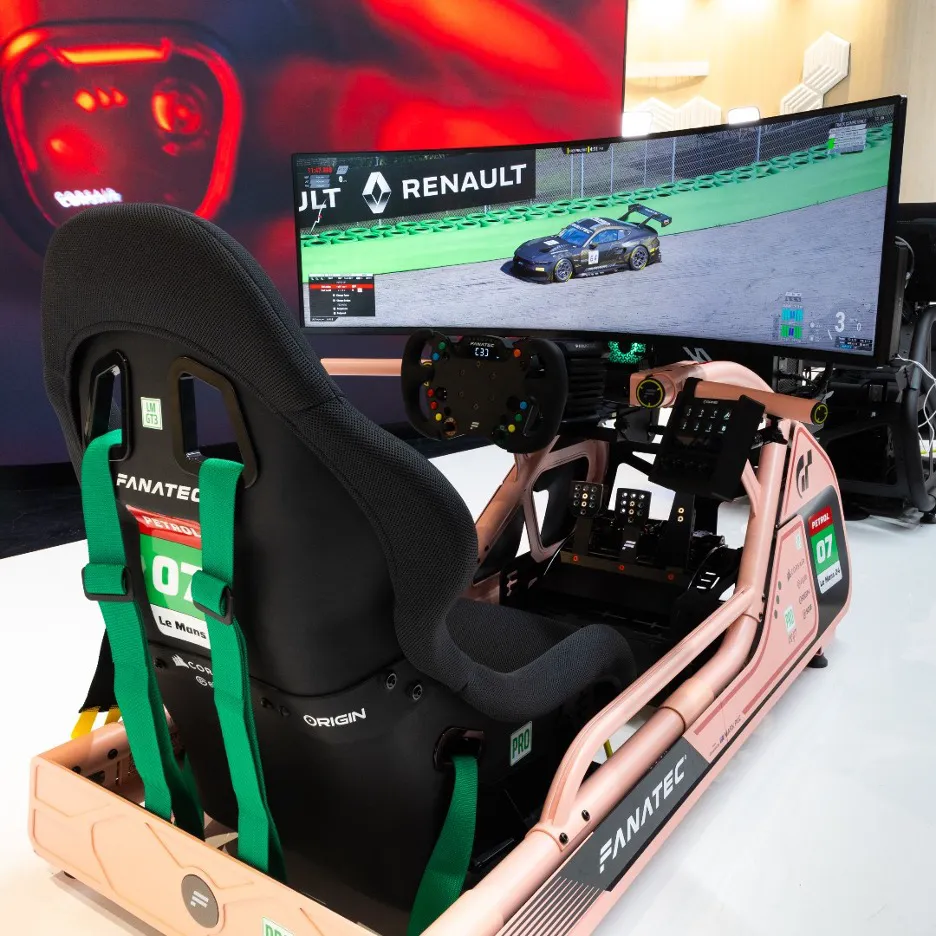
Fanatec makes direct-drive steering wheels, pedals, and modular accessories for PC, PlayStation, and Xbox sim racing rigs, and since late 2024 it’s been owned by Corsair rather than its original German parent company. That ownership change matters more than most gear reviews mention, because it explains the price cuts, firmware updates, and product roadmap changes racers have seen over the past two years.
Who Actually Owns Fanatec Now?
For most of its history, Fanatec was the consumer brand of Endor AG, a Landshut-based company that also built input devices for other industries. Endor ran into serious debt trouble, and in September 2024 Corsair closed its acquisition of the Fanatec Sim Racing brand and all associated personnel in an asset purchase from Endor AG. Corsair kept the Landshut engineering team in place and folded Fanatec into its own peripherals business. A year later, Corsair widened its footprint further by acquiring cockpit maker Trak Racer, adding rigs and motion platforms to sit under Fanatec’s wheels and pedals. If you bought Fanatec gear before 2024 and noticed slower support or supply issues, that instability traces back to the Endor insolvency — not a defect in the products themselves. Corsair Gaming, Inc.
What “Direct Drive” Actually Means
Older force-feedback wheels use belts or gears to connect the motor to the wheel rim, which adds friction, backlash, and a slight mushiness to the feel. Direct-drive bases bolt the wheel straight onto the motor shaft. There’s nothing between the rim and the coils generating torque, so road texture, kerb strikes, and weight transfer come through with far less delay. That’s the whole pitch, and it’s the same technology every serious competitor — Moza, Simucube, Simagic — is now building around.
Personal Experience: Living With a Direct-Drive Setup
I moved from a belt-driven wheel to a CSL DD a few seasons back, and the learning curve wasn’t the hardware — it was the software. Out of the box, force feedback strength defaults to something most people find too aggressive; running it near 100% on a car with heavy curbs in Assetto Corsa Competizione will clip the signal and mute exactly the detail you bought the thing for. Dropping strength into the 60–75% range and letting the in-game force feedback do more of the work made a bigger difference than any hardware upgrade did. The other lesson: load-cell brake pedals need real calibration time. My first week of braking felt inconsistent purely because I hadn’t set a realistic max-force ceiling for my own leg strength, not because the pedal was flawed.
Comparing the Current Wheelbase Lineup
Fanatec’s range spans a wide gap in torque and price, and picking the wrong tier is the single most common buying mistake.
| Wheelbase | Peak Torque | Platform Support | Approx. Price (2026) | Best For |
|---|---|---|---|---|
| CSL DD | 5 Nm (8 Nm with Boost Kit) | PC, Xbox | ~$399 | First upgrade from a belt-driven wheel |
| ClubSport DD+ | 15 Nm | PC, PlayStation, Xbox | ~$899 | Racers switching between console and PC |
| Podium DD | 25 Nm | PC, Xbox | ~$1,199 | Endurance racing and pro-level training |
Fanatec cut prices across its direct-drive wheelbase lineup by up to 30% in early 2026, crediting the change to manufacturing efficiencies from the Corsair deal — a rare case of an acquisition actually lowering prices for existing product lines rather than just funding a flagship release. Traxion
FanaLab: The Software Layer Most Reviews Skip
The hardware gets all the attention, but Fanatec gear is only as good as the software managing it. FanaLab is Fanatec’s own software for analyzing telemetry and fine-tuning force feedback, LED indicators, and vibration effects, and it’s what turns raw torque into something you can actually drive by. If you’re comparing gaming peripherals more broadly, it’s worth noting how much modern hardware — from the PS5 controller’s adaptive triggers to Fanatec’s own pedal load cells — now depends on software tuning rather than the mechanics alone. Newer setups highlighted at recent CES gaming gadget showcases follow the same pattern: firmware and companion apps, not raw specs, decide how good the experience actually feels. Fanatec
Common Mistakes When Buying Fanatec Gear
- Buying more torque than you need. A 25 Nm Podium DD is overkill for a beginner; most racers plateau in enjoyment well before they run out of headroom on a 15 Nm base.
- Ignoring platform compatibility. Some bases, including the CSL DD, don’t support PlayStation — check the console column before ordering.
- Skipping FanaLab setup entirely. Default settings rarely match your car, track, or seating position.
- Forgetting rig rigidity. A high-torque wheelbase mounted to a flimsy desk will transmit vibration into the furniture instead of your hands.
If you’re just starting to build out a broader setup, browsing what’s covered in a current gaming gear buying guide alongside the wheelbase table above will save some trial and error.
FAQ
Is Fanatec still owned by Corsair in 2026?
Yes. Corsair has owned the brand since closing its acquisition of Endor AG’s Fanatec line in September 2024, and has since expanded it by acquiring cockpit maker Trak Racer.
What’s the cheapest Fanatec direct-drive wheelbase?
The CSL DD starts around $399 at 5 Nm of torque, expandable to 8 Nm with the optional Boost Kit.
Does Fanatec work with PlayStation 5?
Only specific models — the Gran Turismo DD Pro and ClubSport DD+ support PlayStation. The standard CSL DD and Podium DD are PC and Xbox only.
What is FanaLab used for?
It’s Fanatec’s companion software for tuning force feedback strength, vibration effects, and steering angle, plus reading live telemetry from supported games.
How much torque do I actually need?
Most racers are satisfied in the 8–15 Nm range. Higher torque adds detail at the extremes but also demands a stiffer rig and more careful tuning.
Are Fanatec prices going up or down after the Corsair acquisition?
Down, so far — Fanatec reduced pricing across its wheelbase lineup in early 2026, citing manufacturing efficiencies.
Actionable Takeaway
Before buying anything, check platform compatibility first, torque second — most people overspend on torque they’ll never fully use while underspending on rig rigidity and pedal calibration, which is what actually determines how the gear feels in practice. If you’re building on PC and PlayStation, the ClubSport DD+ is the current sweet spot; if you’re PC/Xbox-only and just starting out, the CSL DD at 5–8 Nm is plenty.
If you want to see Fanatec‘s current lineup and pricing directly, their site has the full range.