Have you ever caught yourself staring at your reflection, wondering what others really see? Maybe you’re scrolling through dating app photos, second-guessing which angle works best, or perhaps you’re curious whether that new skincare routine is actually making a difference. We’ve all been there—seeking objective feedback about our appearance but finding only subjective opinions from friends (who might be too kind) or strangers online (who might be too harsh).
Here’s the uncomfortable truth: human perception is wildly inconsistent. Your best friend might love your side profile while your colleague thinks your front-facing shots are stronger. This inconsistency isn’t malicious—it’s just human nature. Our judgments are colored by personal preferences, cultural backgrounds, and even our mood on any given day.
That’s where facial analysis technology enters the conversation. AI Face Rater offer something refreshingly different: a data-driven perspective on facial aesthetics, analyzing geometric proportions, symmetry patterns, and structural harmony using algorithms trained on thousands of facial measurements.
What Actually Happens When AI Analyzes Your Face
The Technical Process Behind Facial Mapping
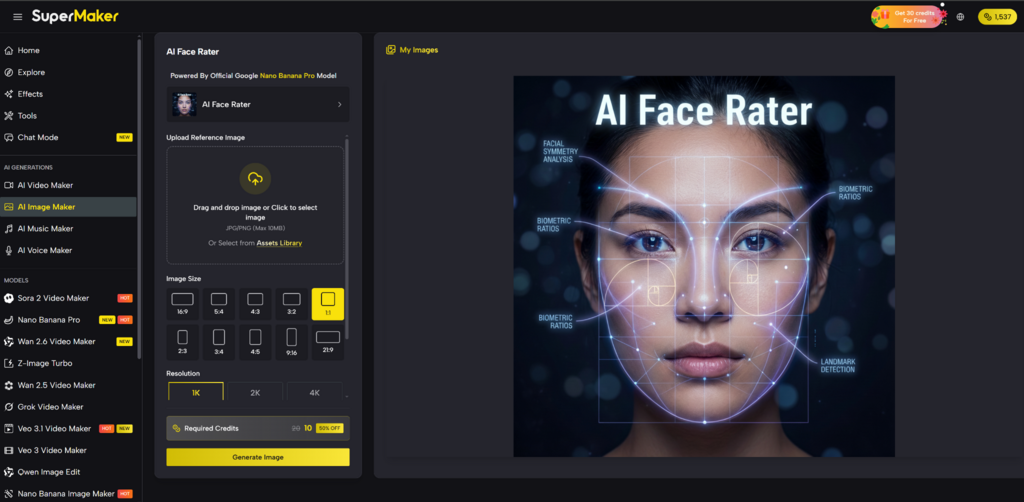
I’ll be honest—when I first uploaded my photo, I expected some generic score with zero explanation. What I got surprised me. The system mapped out specific facial landmarks: the distance between my eyes, the angle of my jawline, how my features aligned with mathematical ratios that aestheticians have studied for decades.
In my testing, the analysis took about 15-20 seconds. The AI identified over 40 facial points, measuring everything from cheekbone prominence to lip-to-nose proportions. What struck me wasn’t just the score itself, but the breakdown showing why that score was assigned.
Understanding the Measurement Framework
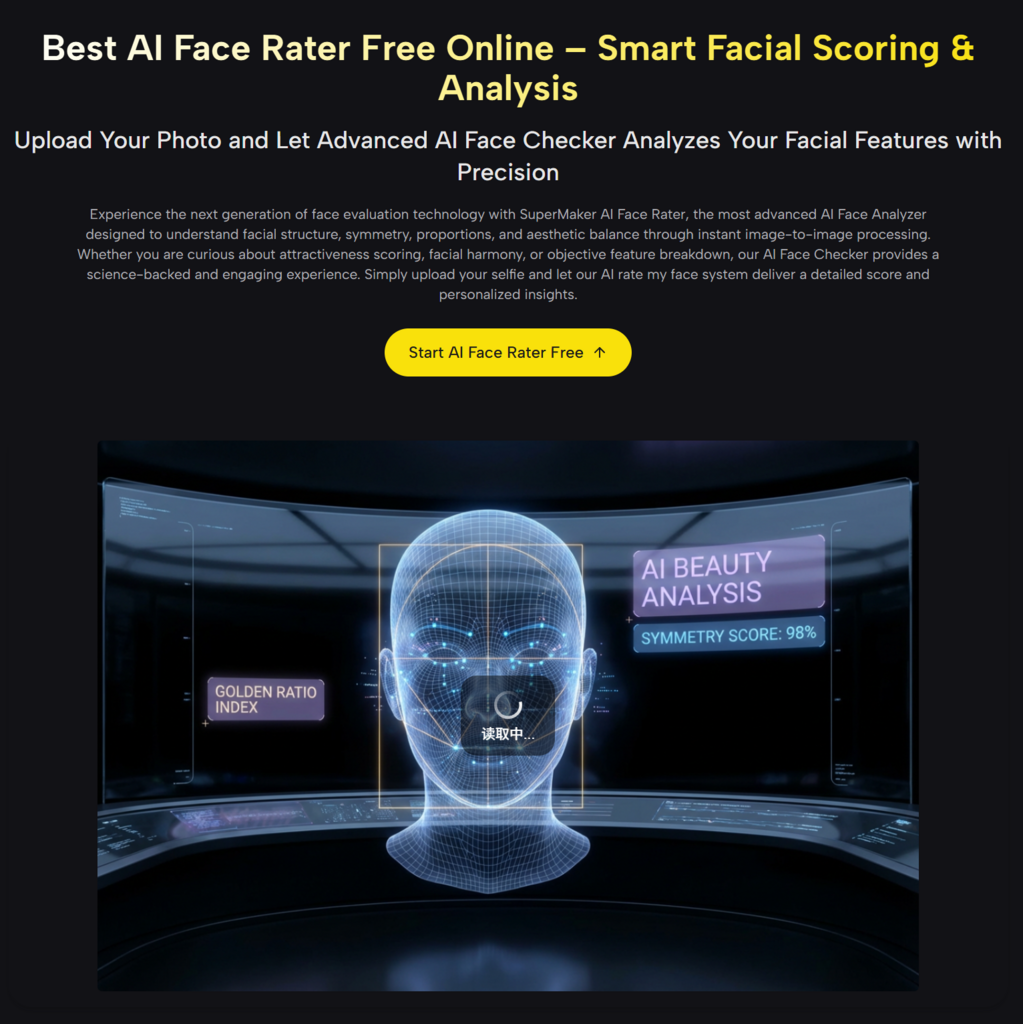
The technology compares your uploaded image against established aesthetic frameworks—things like the golden ratio, facial thirds, and horizontal fifths. Key metrics include symmetry deviation, proportional mapping, contour harmony, and feature spacing relationships.
How This Differs From Traditional Beauty Standards
Comprehensive Comparison Analysis
| Evaluation Aspect | Human Subjective Rating | Generic AI Tools | AI Face Rater |
| Consistency | Varies by person and mood | Somewhat stable | Stable with transparent methodology |
| Feedback Detail | Vague comments | Basic score only | Detailed breakdown with explanations |
| Analysis Depth | Surface impressions | Single metric | Multi-dimensional feature analysis |
| Learning Value | None | Minimal | Educational about facial aesthetics |
| Actionable Insights | Rarely specific | Generic suggestions | Targeted improvement areas |
This comparison isn’t meant to suggest AI is “better” than human perception—they serve different purposes. But when you want objective data about structural features, algorithmic analysis offers something human judgment cannot: reproducibility and specificity.
The Reality Check: What These Tools Can and Cannot Do
Setting Realistic Expectations
Let me be clear: AI facial analysis excels at measuring physical attributes—distances between features, symmetry percentages, ratio calculations. What it doesn’t capture is charisma, confidence, or the way your eyes light up when you smile genuinely.
Variables That Affect Results
In my tests, I uploaded five different photos taken on the same day. The scores varied by 8-12 points depending on lighting and expression. This taught me something valuable: these tools work best as one data point among many, not as definitive verdicts.
Photo Quality Requirements
Results depend heavily on photo quality. I found that natural daylight, a neutral expression, and front-facing perspective produced the most comprehensive breakdowns. Blurry selfies in dim lighting won’t yield the same detailed analysis.
Practical Applications Beyond Curiosity
Personal Progress Tracking
I uploaded photos from three years ago alongside recent ones. The side-by-side comparison revealed subtle changes in facial structure from weight loss that I hadn’t consciously noticed. Seeing objective measurements validated the progress I felt but couldn’t quite articulate.
Professional and Creative Uses
Photography Optimization
Content creators can identify which angles naturally complement their facial structure. Rather than endless trial-and-error, you get data-informed guidance.
Skincare Documentation
Track texture improvements, symmetry changes, or how treatments affect facial contours over months. The measurements provide concrete data points beyond subjective assessments.
Makeup and Styling Strategy
Understanding your facial proportions helps inform contouring techniques, eyebrow shaping, and hairstyle choices that work with your natural structure.
The Bigger Picture: Understanding Facial Aesthetics
Beyond Numbers: The Human Element
| Measurable by AI | Beyond AI’s Reach |
| Facial symmetry percentage | Genuine smile warmth |
| Golden ratio alignment | Charisma and presence |
| Feature proportions | Confidence expression |
| Structural harmony | Personal magnetism |
What I’ve come to appreciate most isn’t the score itself—it’s the education these tools provide about facial anatomy. I never knew about the “facial thirds” concept or how eye spacing relates to nose width in classical beauty analysis. This knowledge shifts the experience from “Am I attractive?” to “How do these features work together?”
Final Thoughts: A Tool, Not a Verdict
Balanced Perspective on AI Analysis
After spending considerable time with facial analysis technology, here’s my honest take: it’s fascinating, occasionally useful, and absolutely not the final word on attractiveness. Use it as you would a fitness tracker—interesting data that informs decisions but doesn’t define your worth.
The Most Valuable Insight
Understanding that beauty assessment, whether human or algorithmic, captures only a fraction of what makes someone genuinely attractive. Confidence, kindness, humor, and authenticity don’t show up in symmetry scores, yet they’re what people actually remember about you.
If you’re curious about the technical aspects of your facial structure, these tools offer legitimate insights. Just remember that the number on the screen measures geometry, not magnetism. And in the real world, magnetism wins every time.