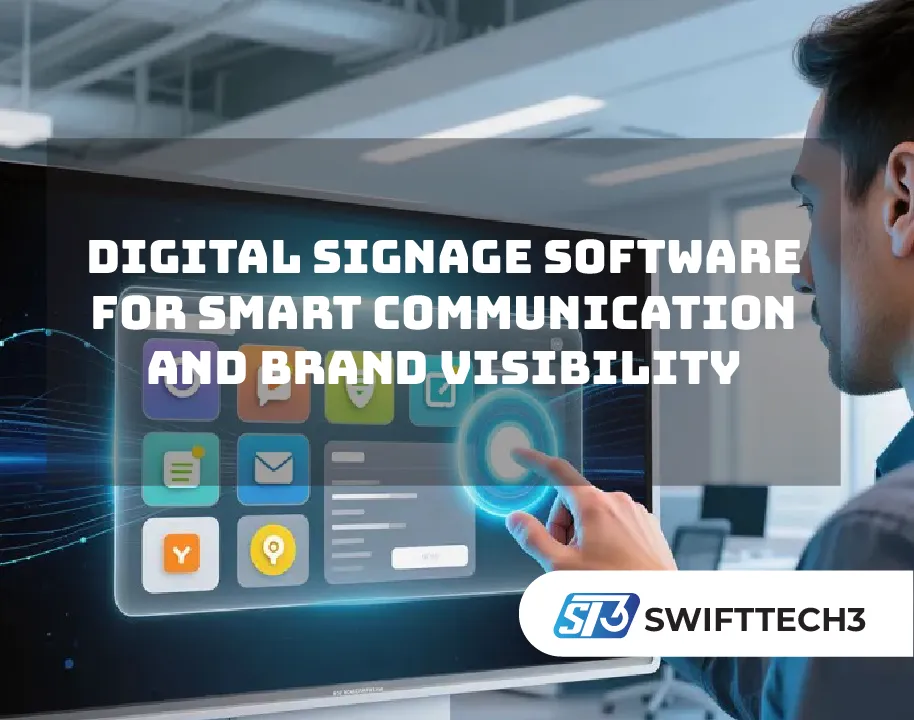
Digital Signage Software: Smart Communication and Stronger Brand Visibility
Digital signage software has become one of the most effective ways for businesses to turn screens into real communication assets instead of passive decorations. In a fast-moving digital world where attention is limited and competition is intense, brands need messaging that can adapt instantly, stay visually consistent, and reach people at the right moment. That is exactly what digital signage software enables. According to Arbitron’s 2010 Digital Place-Based Video Study, 70% of U.S. residents age 12+ recalled seeing a digital video display in at least one of 18 venue categories, which helps explain why digital screens now play such a central role in brand visibility and audience communication.
From retail stores and hospitals to restaurants, offices, schools, and airports, digital signage software helps organizations update content remotely, schedule promotions, improve navigation, support internal communication, and create a stronger visual identity across locations. It is no longer just a display tool. It is a flexible communication platform.
What Makes Digital Signage Software Different from a Basic Display
A screen by itself is not digital signage. A television playing a looped video may look modern, but it lacks the intelligence and control that businesses need. The real value comes from the software layer behind the display.
Digital signage software allows teams to manage content centrally, push updates instantly, automate campaigns, assign content by location or time of day, and monitor screens remotely. That transforms static displays into responsive communication channels.
| Basic Display | Digital Signage Software |
|---|---|
| Manual content changes | Remote content updates |
| Same message all day | Scheduled and dynamic messaging |
| Little or no analytics | Performance reporting and visibility |
| Hard to scale | Easy multi-location management |
| Mostly decorative | Operational, marketing, and branding tool |
Why Digital Signage Software Matters in Modern Communication
Real-Time Messaging
Traditional signage is static. Digital signage software is responsive. Businesses can react to changing conditions, launch a flash sale, display an alert, update product availability, or rotate internal announcements in seconds.
Clarity in Busy Environments
In crowded spaces, confusion leads to delays, frustration, and missed opportunities. Digital signage software improves clarity by presenting messages visually in places where people are already looking. That reduces the need for repeated verbal explanations and helps visitors or customers make faster decisions.
How Digital Signage Software Improves Brand Visibility
Consistent Branding Across Locations
One of the biggest challenges for growing organizations is keeping messaging visually consistent. Digital signage software makes that much easier by centralizing control over templates, brand colors, typography, videos, and layout standards. Whether a company operates one branch or one hundred, the brand can still look unified everywhere.
Stronger Visual Recall
Motion graphics, branded visuals, and well-designed layouts are easier to notice and remember than static printed signs. This gives businesses a better chance to stay visible and recognizable over time.
| Branding Goal | How Digital Signage Helps |
|---|---|
| Consistency | Centralized templates and brand controls |
| Memorability | Dynamic visuals, animation, and video |
| Relevance | Time-based and location-based content updates |
| Professional image | Clean, modern presentation across all screens |
Digital Signage Software as a Real-Time Marketing Tool
Instant Campaign Launches
Marketing teams no longer need to wait for print production or store-by-store coordination. Digital signage software allows offers, promotions, and announcements to go live immediately. That is especially useful for time-sensitive campaigns, inventory shifts, and seasonal pushes.
Time-Based Messaging
Scheduling is one of the strongest advantages of digital signage software. A business can automatically show breakfast promotions in the morning, lunch specials at noon, and evening offers later in the day. The same screen can carry different value depending on timing.
Improving Customer Experience with Digital Signage Software
Reducing Uncertainty
Customers become frustrated when they do not know what is happening. Queue updates, estimated wait times, service instructions, and order-ready notices all make waiting feel more manageable. Clear information improves the overall experience.
Guiding Visitors
Wayfinding is one of the most practical use cases for digital signage software. Malls, hospitals, office towers, and campuses use screens to help people navigate complex spaces without needing constant staff support.
Digital Signage Software for Internal Communication
Not all communication is customer-facing. Internal screens can keep teams aligned by displaying goals, announcements, safety alerts, schedules, and company news in shared spaces. This is especially valuable in environments where employees may not spend much time checking email or collaboration apps.
It can also support company culture by highlighting employee wins, milestones, and team recognition.
Industry Applications of Digital Signage Software
| Industry | Common Use Cases |
|---|---|
| Retail | Promotions, product highlights, point-of-sale messaging |
| Restaurants | Digital menu boards, upsell prompts, pricing updates |
| Healthcare | Queue management, patient education, navigation |
| Education | Campus alerts, event announcements, wayfinding |
| Corporate | Dashboards, internal communication, visitor guidance |
| Hospitality | Guest information, event schedules, branded messaging |
Key Features That Define Powerful Digital Signage Software
- Centralized control: Manage all displays from one dashboard across multiple locations.
- Smart scheduling: Automate what appears on screen by time, date, campaign, or event.
- Remote monitoring: Check screen health, troubleshoot issues, and reboot devices without being onsite.
- Template support: Create polished content faster with reusable templates and custom layouts.
- Analytics reporting: Measure what is playing, when it runs, and where optimization is needed.
- Access controls: Assign permissions so only the right people can edit or publish content.
Cloud-Based vs On-Premise Digital Signage Software
Deployment model matters because it affects cost, flexibility, control, and maintenance.
| Model | Best For | Main Advantage | Main Trade-Off |
|---|---|---|---|
| Cloud-Based | Multi-location brands, distributed teams, fast scaling | Remote access and easier deployment | Ongoing subscription fees |
| On-Premise | Organizations with strict control or local infrastructure needs | Greater direct control over environment | Higher maintenance burden |
Digital Signage Software Pricing Models
Pricing is a major search intent because businesses want to understand not just features, but how software will fit their operating model. In most cases, digital signage software pricing falls into two broad categories: subscription-based SaaS and perpetual licensing. Capterra notes that digital signage pricing can range widely, from about $8 per screen to more than $390 per month depending on the tool, feature depth, and deployment size.
SaaS Subscription Pricing
With the SaaS model, businesses pay a recurring monthly or annual fee. This is now the most common approach because it usually includes cloud hosting, updates, support, and easier scaling. It works well for organizations that want flexibility and lower upfront costs.
Perpetual License Pricing
With a perpetual model, the buyer pays a larger one-time fee to use the software indefinitely. This is more often associated with on-premise deployments. It can make sense for organizations that prefer capital expenditure over subscription spending, but support, upgrades, and maintenance may be billed separately.
| Pricing Model | How It Works | Best Fit | Watch Out For |
|---|---|---|---|
| SaaS / Subscription | Monthly or annual recurring payment | Fast-growing teams, multi-site businesses, lower upfront budget | Ongoing operating costs |
| Perpetual License | One-time software purchase | Organizations wanting long-term ownership and local control | Higher upfront investment and separate maintenance costs |
What Usually Affects Price
- Number of screens or players
- Cloud vs on-premise deployment
- Advanced scheduling and automation
- Analytics and proof-of-play reporting
- Integrations, security, and user permissions
- Support levels and enterprise service requirements
Scalability and Long-Term Value
One of the biggest strengths of digital signage software is that it can grow with the business. A company can start with one or two displays and expand into a full-screen network without replacing its entire communication system. Central teams can maintain brand standards while local teams adjust selected content for local relevance.
That makes digital signage software a long-term operational asset, not just a short-term marketing tool.
Security and Reliability
Because screens are public-facing, access control matters. Good digital signage software should include user roles, approval workflows, and permission settings to prevent unauthorized changes. Reliability matters just as much. If screens fail during a promotion, event, or critical update, communication breaks down instantly.
Common Mistakes Businesses Make
| Mistake | Why It Hurts | Better Approach |
|---|---|---|
| Too much content on one screen | People ignore cluttered displays | Keep messages short, focused, and visual |
| No content strategy | Screens become background noise | Define purpose, audience, and goals for each display |
| Ignoring analytics | No insight into what works | Review performance and refine content regularly |
| Weak governance | Brand inconsistency and errors increase | Use templates, permissions, and approval workflows |
The Future of Digital Signage Software
Digital signage software is moving toward more automation, more personalization, and deeper integration with connected environments. AI-driven content decisions, touchscreen experiences, QR-based journeys, and sensor-triggered messaging are all pushing signage beyond passive display into interactive communication.
As the technology matures, the most successful businesses will be the ones that treat signage not as a screen problem, but as a communication strategy.
Conclusion
Digital signage software helps businesses communicate more clearly, respond more quickly, and stay visually consistent in a crowded market. It improves customer experience, strengthens internal communication, supports real-time marketing, and gives every screen a more strategic role. For brands that want stronger visibility and smarter communication, digital signage software is no longer optional. It is a serious business advantage.
FAQ’s
What is digital signage software used for?
Digital signage software is used to manage and display content on screens for communication, marketing, branding, and information sharing. Businesses use it to show promotions, guide customers, share updates, and improve both customer and employee experiences in real time.
Is digital signage software expensive?
The cost of digital signage software varies depending on features, number of screens, and deployment model. Many cloud-based solutions offer affordable monthly pricing, while larger enterprise systems may require higher investment but provide advanced features and scalability.
For More Similar Articles Visits: swifttech3