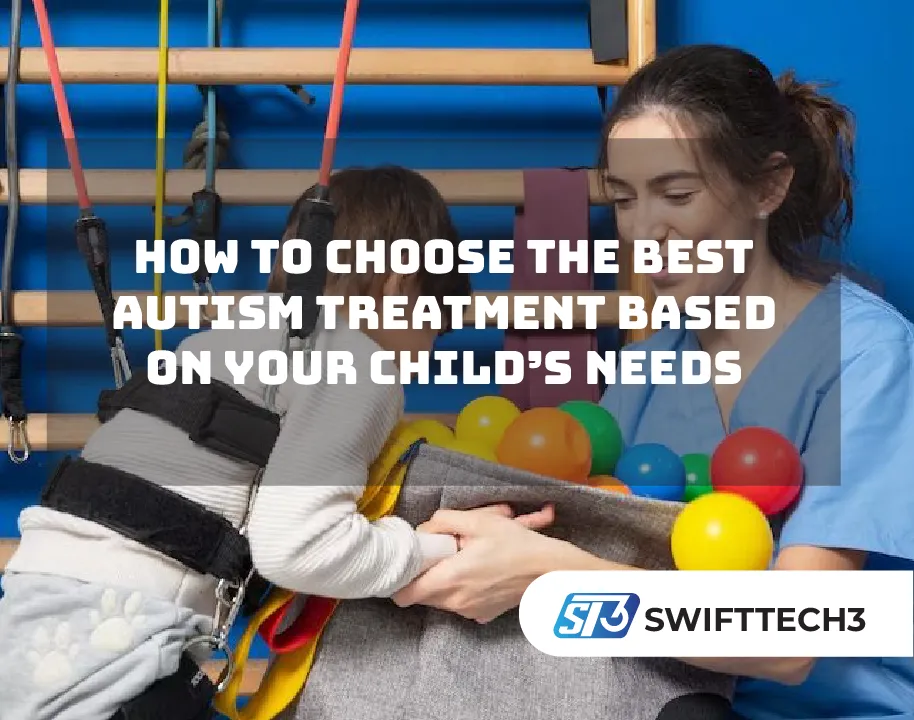
Choosing autism treatment can feel like one of the hardest decisions a parent has to make. There is no single therapy that works for every child, and that is exactly why the decision matters so much. Autism is a spectrum, and each child brings a different mix of strengths, sensitivities, communication styles, and support needs. According to the CDC, autism now affects about 1 in 31 children in monitored U.S. communities, which means more families than ever are trying to understand what effective, individualized care really looks like. Rather than chasing trends or one-size-fits-all programs, the best approach is to match treatment to your child’s actual profile and to choose therapies supported by evidence, clear goals, and regular progress tracking.
Why Personalized Autism Treatment Matters
Autism spectrum disorder (ASD) does not look the same in every child. Some children need the most help with language and communication. Others may struggle more with sensory regulation, emotional flexibility, motor planning, school participation, or behavior during daily routines. That is why a personalized plan tends to work better than a generic one.
A child-centered treatment plan usually considers:
- Developmental level
- Communication abilities
- Sensory profile
- Behavior patterns and triggers
- Learning style
- Daily living skills
- Family routines, values, and priorities
The goal is not to find the “most popular” therapy. The goal is to find the right mix of supports that helps your child communicate, participate, and function more comfortably in daily life.
Step 1: Start With a Comprehensive Evaluation
Before choosing treatment, get a thorough developmental and diagnostic evaluation. A strong assessment gives you a clearer baseline and helps identify what kind of support should come first.
Simple Diagnostic Flowchart
Parent or pediatrician notices concerns
Developmental screening and referral
Comprehensive autism evaluation
Therapy goals based on strengths and needs
Ongoing progress monitoring and plan updates
A full evaluation may include:
Clinical Developmental Assessment
A developmental pediatrician, psychologist, neurologist, or autism-trained clinician reviews social communication, behavior, play, learning patterns, and developmental history.
Speech and Language Evaluation
This helps identify expressive language, receptive language, social communication, and whether a child may benefit from AAC tools, visual supports, or picture-based communication methods.
Occupational Therapy Assessment
This looks at sensory processing, fine motor skills, emotional regulation, self-care routines, feeding challenges, and participation in play or school tasks.
Educational Evaluation
If your child is preschool- or school-aged, an educational assessment can help define classroom supports, learning readiness, and social participation goals.
Step 2: Understand the Main Types of Autism Treatment
Different therapies focus on different needs. Knowing what each one is designed to address makes treatment decisions much easier.
| Therapy Type | Primary Focus | Typical Setting | Best Fit For |
|---|---|---|---|
| ABA | Behavior, skill-building, measurable goals | Clinic, home, school | Children needing structured teaching and behavior support |
| DIR/Floortime | Connection, interaction, emotional development | Home, clinic, play-based sessions | Children who benefit from relationship-led, play-based engagement |
| Speech Therapy | Language, social communication, AAC support | Clinic, school, home | Children with speech, language, or communication challenges |
| Occupational Therapy | Sensory regulation, fine motor, self-care, daily functioning | Clinic, school, home | Children with sensory, motor, feeding, or routine-based difficulties |
| School-Based Supports / IEP | Academic access, classroom participation, related services | School | Children needing coordinated educational support |
Behavior-Based Therapies
Applied Behavior Analysis (ABA)
ABA is one of the most researched autism interventions. It uses structured teaching, reinforcement, and measurable goals to support communication, adaptive skills, and behavior change. For some children, it can be especially helpful when challenging behaviors interfere with learning or daily life.
Positive Behavior Support (PBS)
PBS focuses on understanding why a behavior happens and teaching more functional alternatives. This approach often works well when behavior is linked to frustration, sensory overload, communication barriers, or transitions.
Developmental and Relationship-Based Therapies
DIR/Floortime
DIR/Floortime emphasizes emotional connection, shared attention, play, and back-and-forth interaction. It can be a good fit for families who want a developmental, child-led model that builds social engagement through relationships.
Relationship Development Intervention (RDI)
RDI aims to strengthen flexible thinking, social learning, and guided participation in everyday life. It is often used to support real-world interaction rather than isolated drills.
Communication-Focused Therapies
Speech Therapy
Speech-language therapy is commonly recommended for autistic children who need support with understanding language, speaking, social communication, or pragmatic language skills. It may also include augmentative and alternative communication tools when spoken language is limited.
PECS and Other Visual Communication Systems
For minimally speaking or non-speaking children, picture-based systems may support communication before or alongside spoken language development.
Occupational Therapy
Occupational therapy helps children participate more successfully in daily routines. It can support:
- Fine motor coordination
- Sensory regulation
- Dressing, feeding, and toileting routines
- Attention and transitions
- Play and classroom participation
Educational and School-Based Support
School supports matter a lot. A good Individualized Education Program (IEP) or equivalent learning plan can help align therapy goals with classroom needs, peer interaction, and academic participation.
Step 3: Match Treatment to Your Child’s Profile
This is where parents often make the best decisions, because no report tells the whole story better than daily life does. Think about what is most affecting your child right now.
If Communication Is the Biggest Challenge
Prioritize speech-language therapy, AAC support, visual communication systems, and parent strategies that encourage meaningful communication throughout the day.
If Behavior Is Interfering With Learning or Safety
Structured behavior support, ABA-informed programs, or functional behavior interventions may help identify triggers and teach replacement skills.
If Sensory Needs Are Getting in the Way
Occupational therapy may help when a child struggles with noise, textures, clothing, movement, transitions, feeding, or emotional regulation.
If Social Engagement Is a Priority
Play-based developmental therapies, social communication work, and guided peer interaction may be useful.
If School Is the Main Area of Concern
Coordinate with teachers, school psychologists, and therapists so support strategies are consistent across home and school.
Step 4: Look for Evidence, Not Hype
Parents are often exposed to a flood of treatment claims online. Some are promising, some are experimental, and some are marketed far beyond the evidence. A stronger therapy choice usually has these features:
- Research support from multiple studies
- Clear and measurable goals
- A qualified provider with autism experience
- Progress monitoring over time
- A plan tailored to the child rather than a fixed package for everyone
It is smart to be cautious with any treatment described as a cure, a miracle, or a guaranteed solution. High-quality autism care is usually gradual, individualized, and evidence-informed.
Step 5: Make Sure the Plan Fits Real Family Life
The best treatment plan is one your family can actually sustain. Even a strong therapy model may fall apart if the schedule, cost, or travel burden is unrealistic.
Consider these practical questions:
- How many hours per week are realistic?
- Does insurance cover any part of it?
- Can the provider coordinate with school staff?
- Will the therapist coach parents, or only work with the child?
- Does your child seem comfortable and engaged with the provider?
Family involvement often improves outcomes because many of the most important learning moments happen at home, in routines, in play, and in everyday interactions.
Step 6: Monitor Progress and Adjust
Autism treatment should never feel static. A good plan evolves as your child develops.
Look for progress in areas such as:
- Communication growth
- Reduced frustration or behavior escalation
- Improved social attention or participation
- Greater independence in routines
- Better tolerance for transitions and sensory demands
- Improved school readiness or classroom functioning
Ask providers to show data, not just impressions. Even simple tracking can help you see whether goals are meaningful and whether the current approach should continue or be adjusted.
When to Consider Multidisciplinary Care
Some children benefit most from a team approach. Multidisciplinary care may be especially helpful when a child has several overlapping needs, such as:
- Autism plus ADHD, anxiety, or sleep difficulties
- Significant language delay
- Feeding or sensory-based challenges
- Learning difficulties at school
- Limited progress after an initial therapy period
In these cases, it can help when pediatricians, therapists, educators, and caregivers are working from the same priorities instead of in isolation.
How to Find the Right Provider Near You
Instead of choosing a clinic based only on marketing language, focus on whether the provider can explain how they assess needs, set goals, involve caregivers, and measure progress.
In cities such as Nashik, families sometimes conduct early research and reach out to providers offering the best autism treatment in Nashik so they can access coordinated care teams and experienced therapists who tailor services to each child’s profile.
Ask About Qualifications
Look for licensed or credentialed professionals with autism-specific experience in the therapy they provide.
Ask How Goals Are Chosen
Strong providers do not use generic goal templates for every child. They assess, prioritize, and explain why specific goals matter.
Observe the Fit
Rapport matters. Your child does not need to “perform” perfectly in the first session, but there should be signs of safety, responsiveness, and respectful interaction.
Ask How Progress Is Shared
You should be able to understand what is being worked on, what success looks like, and how often plans are reviewed.
Choose Collaboration Over Isolation
Providers who communicate with families, schools, and other clinicians tend to support better carryover across settings.
Questions Parents Can Ask Before Starting Therapy
- What specific skills will this therapy target first?
- How will progress be measured?
- How are parents involved?
- How do you adapt treatment if a child is overwhelmed or not progressing?
- Do you collaborate with schools or other therapists?
- What does a typical session look like?
FAQs
At what age should autism treatment begin?
Early intervention is strongly recommended, especially in the first three years of life when brain development is highly active. Still, support can be beneficial at any age, and it is never “too late” to start.
Does my child need a formal autism diagnosis before therapy begins?
A formal diagnosis helps guide treatment planning and access to services, but children with clear developmental concerns can often begin supportive therapies while the full evaluation process is underway.
Is ABA always the best autism treatment?
Not automatically. ABA is widely researched and can be very effective for some children, but the best plan depends on the child’s communication, behavior, sensory, social, and daily living needs. Many children benefit from a combination of therapies.
Can speech therapy and occupational therapy be used together?
Yes. In fact, many children benefit from combined support because communication, regulation, play, and everyday functioning often overlap.
How do I know a therapy is actually helping?
Look for measurable goals, progress data, and meaningful improvements in daily life such as communication, independence, participation, and reduced distress.
Conclusion
Choosing the best autism treatment is rarely about picking one “perfect” therapy. It is about building the right support system for your child at this stage of development. That process starts with a careful evaluation, continues with evidence-informed choices, and works best when parents, providers, and educators stay aligned around practical goals.
When treatment is personalized, respectful, and grounded in real progress, families are in a much stronger position to help their child grow in ways that truly matter.
Trusted Medical References
- CDC: Treatment and Intervention for Autism Spectrum Disorder
- CDC: Data and Statistics on Autism Spectrum Disorder
- CDC: Screening and Diagnosis of Autism Spectrum Disorder
- American Academy of Pediatrics: Identification, Evaluation, and Management of Children With ASD
- NICHD: Treatments for Autism Spectrum Disorder
- NICHD: Occupational Therapy for Autism
- NIDCD: Autism Spectrum Disorder and Communication Problems in Children
- National Autism Center: Evidence-Based Autism Interventions
For More Similar Articles Visits: Swifttech3