5 Signs You Need a Managed AWS Provider in 2026
Amazon Web Services gives businesses access to flexible infrastructure, global reach, and enterprise-grade tooling. But once your environment starts growing, AWS can also become expensive, time-consuming, and difficult to manage without specialist support. If your team is dealing with rising cloud bills, security anxiety, downtime, or scaling issues, it may be time to bring in a managed AWS provider.
A managed AWS provider is not just an outsourced IT vendor. The right partner helps reduce cloud waste, strengthen security, improve uptime, and free your internal team to focus on product growth instead of infrastructure problems.
Why businesses outgrow the DIY AWS approach
AWS is powerful for startups and growing companies because it lets you launch fast without buying physical infrastructure. But that flexibility comes with complexity. There are hundreds of services, layered permissions, usage-based pricing, and architecture decisions that directly affect performance and cost.
What starts as a simple cloud setup can quickly turn into a full-time operational burden. At that point, your business is no longer just building products or serving customers. It is also managing a complex cloud environment that needs constant attention.
So when should you switch to Managed aws? Here are five signs your business likely needs help right away.
1. Your cloud bills are rising fast and no one can explain them
One of the biggest warning signs is sudden AWS bill growth without a clear reason. You may start out paying a few hundred dollars per month, then suddenly find invoices climbing into the thousands.
This happens because AWS uses a pay-as-you-go pricing model. It is flexible, but also easy to misuse when environments are not reviewed regularly.
Common reasons for AWS bill shock
- A developer launched a large test instance and forgot to shut it down.
- Old snapshots, backups, or storage volumes are still being billed.
- Your workloads are over-provisioned and running on instances that are larger than necessary.
- Bandwidth, load balancing, or database IOPS costs have quietly grown over time.
If you cannot explain where your cloud budget is going, that is a business problem, not just a technical one. A managed AWS provider typically performs cost reviews, rightsizing, Reserved Instance planning, and Savings Plan optimization to remove waste.
In many cases, the savings from AWS cost optimization can offset a meaningful part of the provider’s fee.
2. Your developers spend more time maintaining infrastructure than building products
Your in-house engineering team should be focused on product development, customer experience, and growth. But in a DIY AWS setup, developers often get pulled into maintenance work that slows innovation.
Signs this is already happening
- Engineers are troubleshooting crashes instead of shipping new features.
- Time is being lost to manual patching, backups, and routine maintenance.
- Senior technical staff are stuck firefighting instead of planning architecture improvements.
This creates a hidden cost. Even if your cloud environment is technically “working,” you are paying highly skilled developers to do infrastructure support rather than high-value product work.
A managed AWS partner takes over recurring operational tasks such as monitoring, patch management, backups, maintenance windows, and incident response. That gives your team more time to focus on the work only they can do.
3. You are worried about security, but there is no real strategy behind it
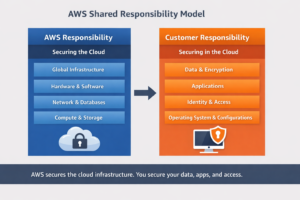
Many businesses assume cloud hosting automatically means secure hosting. That is not how AWS works. AWS operates on a shared responsibility model. AWS secures the underlying infrastructure, but your company is still responsible for what runs inside the environment, including user access, operating systems, data protection, and workload configuration.
If someone asks how your AWS environment is monitored for threats, misconfigurations, or exposed services and the answer is vague, that is a serious sign you need help.
What a managed AWS provider usually improves
- Identity and access management controls
- Multi-factor authentication and privileged access rules
- Patch management and hardening policies
- Backup and disaster recovery readiness
- AWS security audits and continuous monitoring
Vulnerability scanning is one of the most useful detective controls in this process. It helps identify outdated software, weak credentials, exposed ports, and other known weaknesses before attackers can exploit them.
Scanning alone is not enough to secure an environment, but it is a critical part of a broader AWS security strategy. A qualified managed provider combines scanning with access control, alerting, patching, logging, and policy enforcement to reduce risk in a more systematic way.
 4. Downtime causes panic because there is no dependable response process
When your website, app, or backend service goes down, every minute matters. Lost sales, unhappy users, and brand damage can add up very quickly.
In a DIY environment, outages often create chaos. Someone has to be woken up, logs have to be checked manually, and the response depends on whoever is available at that moment. That is stressful and unreliable.
What managed cloud services change
- 24/7 infrastructure monitoring
- Automated alerts and health checks
- Defined incident response playbooks
- Faster root-cause investigation
- Proactive remediation before users notice a problem
A managed AWS provider helps turn reactive firefighting into structured operations. Instead of panicking during outages, your business gets a repeatable process handled by engineers who deal with infrastructure incidents every day.
5. You are not confident your platform can handle traffic spikes
Growth is supposed to be a good thing. But for many businesses, success creates its own technical risks. A product launch, campaign, holiday rush, or viral post can cause a sudden traffic spike that overwhelms your environment.
That is when a “success disaster” happens. Demand increases, customers arrive, and the platform slows down or crashes before the business can benefit.
AWS offers tools like auto-scaling, load balancing, and elastic infrastructure, but these features still need to be configured correctly. Poor scaling rules can lead to slow response times, failed launches, or runaway costs.
A managed AWS provider designs your infrastructure to scale more intelligently. They test for load, tune performance thresholds, and make sure your environment can support both normal demand and sudden peaks without breaking the customer experience.
When to hire a managed AWS provider
If even one or two of these issues feel familiar, your business may already be at the point where managed support makes sense. The decision is not really about outsourcing for convenience. It is about reducing operational drag and protecting the business from preventable problems.
You should seriously consider a managed AWS provider if:
- Your monthly AWS spend keeps increasing without a clear explanation.
- Your technical team is constantly pulled away from core development work.
- You need stronger AWS security audit processes and ongoing monitoring.
- Your uptime depends too heavily on one internal person.
- Your growth plans could outpace your current cloud architecture.
Conclusion
There comes a point where trying to manage AWS internally stops being efficient and starts becoming expensive. Rising costs, weak visibility, security gaps, downtime stress, and poor scalability are all signs that the DIY model is no longer serving the business.
Moving to managed AWS is not about giving up control. It is about building a more mature, resilient cloud operation with the right expertise behind it. The best managed providers help you cut waste, strengthen security, and keep your team focused on growth.
If your business is already feeling the strain, now is a good time to take a closer look at your AWS environment and identify where expert support could make an immediate impact.
Download our AWS Cost Optimization Checklist and use it to spot waste, security gaps, and scaling risks before they become bigger problems.
Frequently Asked Questions
What does a managed AWS provider do?
A managed AWS provider helps businesses operate their cloud environments more effectively. Services often include monitoring, maintenance, cost optimization, backup management, security hardening, incident response, and architecture support.
Can a managed AWS provider reduce cloud costs?
Yes. Many providers reduce waste by identifying idle resources, rightsizing instances, improving storage policies, and recommending savings mechanisms such as Reserved Instances or Savings Plans.
Is AWS secure without a managed service provider?
AWS provides secure infrastructure, but customers are still responsible for securing workloads, identities, data, and configurations. A managed provider can strengthen that side of the shared responsibility model.
When should a startup switch to managed AWS?
A startup should consider managed AWS when internal teams are losing too much time to infrastructure issues, bills are becoming unpredictable, or the business needs stronger uptime and security practices to support growth.
About the Author
Written by an AWS-focused cloud infrastructure specialist with experience in AWS architecture, cloud operations, cost optimization, and managed services strategy for growing businesses.
Read more engaging articles in the Business category at Swifttech3.