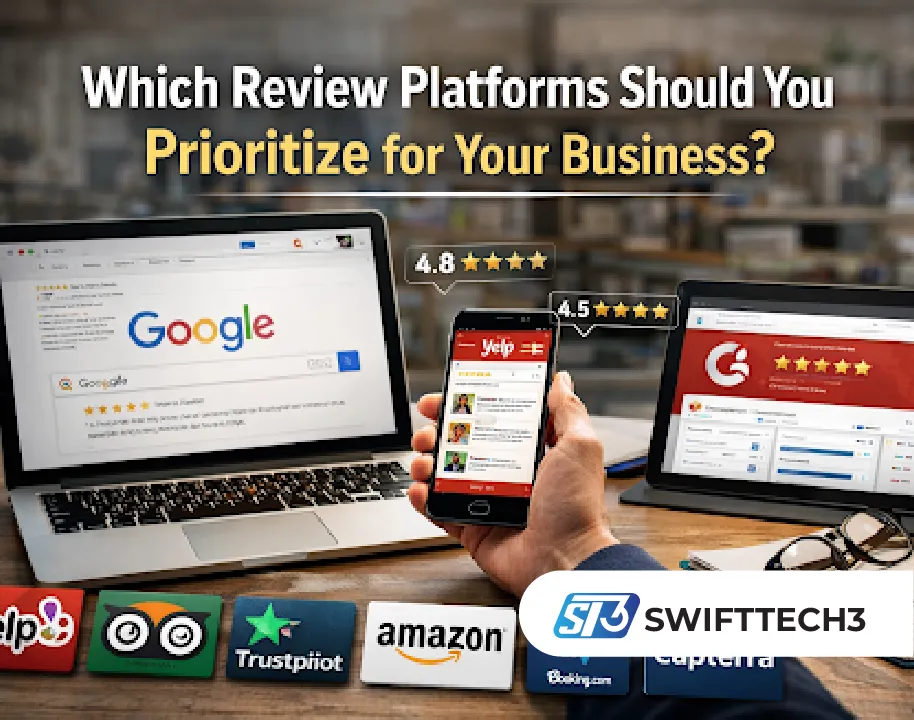
Not every review platform deserves equal attention. For most businesses, the real win is not getting more reviews everywhere. It is becoming highly credible on the two or three platforms that buyers actually trust before they spend money.
Think about how people buy today. A customer might find you on Google, sanity-check you on Yelp, compare alternatives on G2, and then make the final decision after reading product reviews on your own site. Review behavior is multi-step now, which means platform prioritization matters just as much as review volume.
This guide gives you a practical framework to choose your Primary 2 review platforms, support them with one or two secondary channels, and avoid wasting time on sites that do not move revenue.
Why platform choice matters more than getting more reviews
Reviews do more than build trust. They shape discovery, shortlist decisions, and conversion.
For local businesses, Google remains the biggest review gateway. BrightLocal’s consumer review research has consistently shown that Google is the dominant platform people use when checking local businesses, and its 2025 benchmark has been widely cited at 83%. You can review BrightLocal’s research here: BrightLocal Local Consumer Review Survey.
For ecommerce, ratings and reviews are directly tied to purchase confidence. PowerReviews reports that the strongest-performing rating range for conversion tends to sit around 4.5 to 4.99 stars, while a perfect 5.0 can actually feel less believable to shoppers. Source: PowerReviews Guide to Ratings & Reviews.
The takeaway is simple: your goal is not platform sprawl. Your goal is to dominate where your buyers verify trust for your category.
Before you move forward, if you want someone professional in reviews management field that can do all the research, create accounts and increase your trustscore, we suggest you go for a legitimate review management agency like BoostFunda.
Step 1: Start with how customers discover you
Before choosing any platform, answer one question: Where does the first serious shortlist happen?
Local intent discovery
Customers search near me, open Maps, and compare a few local options.
- Priority platforms: Google Business Profile, Yelp
- Best for: Clinics, restaurants, salons, gyms, home services, local retailers
- Why it works: Google drives discovery, while Yelp often acts as the second opinion in service-heavy markets
Marketplace-first discovery
Customers begin inside a marketplace, not on Google.
- Priority platforms: Amazon, Etsy, eBay, Walmart Marketplace, Daraz, niche marketplaces
- Best for: DTC brands, third-party sellers, specialty products
- Why it works: The marketplace itself becomes the trust layer, while your on-site reviews close hesitant buyers
Category-expert discovery
Buyers use specialist platforms because the purchase feels risky, expensive, or technical.
- Priority platforms: G2, Capterra, Software Advice, Clutch, GoodFirms, SourceForge
- Best for: SaaS, agencies, B2B services, technical software
- Why it works: Buyers want comparison-grade proof, not just general reputation
Travel and experience discovery
People compare experiences more than features.
- Priority platforms: Google, TripAdvisor, Booking.com, Expedia
- Best for: Hotels, tours, attractions, restaurants in tourist areas
- Why it works: Recency and review detail strongly influence traveler trust
Step 2: Choose your Primary 2 with a simple scoring method
Instead of choosing platforms because they are famous, score each one against how your buyers actually make decisions.
| Criteria | Question to Ask | Score (1–5) |
|---|---|---|
| Buyer relevance | Are your ideal buyers already using this platform? | |
| Search visibility | Does this platform rank for your brand or category keywords? | |
| Conversion impact | Does it influence the final purchase decision? | |
| Proof strength | Do buyers trust reviews there in your category? | |
| Operational fit | Can your team consistently ask for and manage reviews there? |
Add the scores. Your top two platforms become your Primary 2. The next one or two become your Secondary platforms. This model reduces noise and keeps your review strategy tied to revenue, not vanity metrics.
Pro Tip
If your team is stretched thin, it is often smarter to fully optimize two platforms than to maintain six weak profiles. Review momentum compounds when your ask process, response habit, and customer proof all point in the same direction.
Step 3: Match platforms to your business type
Local businesses
Examples: clinics, salons, restaurants, home services, gyms, local retail.
Primary 2: Google Business Profile, Yelp
Secondary: Facebook, industry directories
If you only have time for one habit, make it a weekly Google review routine. For most local categories, that is where the review journey begins. BoostFunda
Hospitality and tourism
Examples: hotels, attractions, tours, destination restaurants.
Primary 2: Google, TripAdvisor
Secondary: Booking.com, Expedia, Facebook
In travel, recent reviews matter a lot. Travelers often treat recency as proof that quality is still consistent right now.
E-commerce and DTC brands
Examples: Shopify brands, subscription products, Amazon sellers, specialty ecommerce stores.
Primary 2: Your main marketplace, on-site product reviews
Secondary: Trustpilot, Google if you have a physical location or showroom
On-site reviews are especially important for products with skepticism triggers, such as skincare, supplements, electronics, and high-ticket items.
SaaS companies
Examples: B2B SaaS, AI tools, analytics platforms, cybersecurity products.
Primary 2: G2, Capterra
Secondary: Google, Trustpilot if you also sell to consumers
These platforms do not just support marketing. They influence shortlist decisions during the sales cycle.
If you want a real organic increase in you Trustpilot trustscore, you can use a reputation management service, and they will handle everything for your brand.
Agencies and B2B services
Examples: marketing agencies, dev shops, consultants, design studios, outsourcing firms.
Primary 2: Clutch, Google
Secondary: GoodFirms, LinkedIn recommendations
For high-ticket services, a few detailed, credible reviews can outperform dozens of shallow testimonials.
Apps and consumer tech
Examples: mobile apps, fintech tools, games, productivity apps, consumer AI products.
Primary 2: Apple App Store, Google Play
Secondary: Product Hunt, Reddit depending on category
For app businesses, store ratings affect both conversion and perceived reliability inside the install flow.
Step 4: Understand platform intent so you do not chase the wrong kind of review
Not all review platforms do the same job. A strong reputation strategy usually covers the layer that matters most to your business model.
Discovery reviews
These influence whether someone clicks, calls, or visits.
Examples: Google, Yelp, TripAdvisor
Comparison reviews
These help buyers justify a shortlist choice.
Examples: G2, Capterra, Clutch
Conversion reviews
These remove final doubt right before purchase.
Examples: On-site product reviews, Amazon reviews, app store ratings
Step 5: Use data-backed reality checks
If you are wondering whether one platform is enough, it usually is not. Buyer behavior is increasingly multi-source. BrightLocal’s review research shows that many consumers check more than one platform before making a decision, which reinforces why a Primary 2 model is practical rather than excessive.
It is also worth noting that review-like validation now happens beyond classic review sites. BrightLocal has highlighted growing use of alternative platforms such as Instagram and TikTok for local business discovery and trust checks. Those channels do not replace Google or G2, but in visual categories like beauty, food, fitness, travel, and lifestyle, they often act as a proof layer before the final click.
In plain terms: buyers often triangulate trust. They do not just want stars. They want consistency across multiple places.
Step 6: Build a realistic prioritization plan
Month 1: Fix the foundations
- Claim and complete your profiles
- Standardize branding, contact details, photos, and URLs
- Create a response playbook for both positive and negative reviews
Months 2 to 3: Establish steady review velocity
- Choose one repeatable review-ask moment in the customer journey
- Use email, SMS, QR codes, receipts, or in-app prompts
- Track weekly review count, average rating, and response time
Months 4 to 6: Expand and defend
- Add campaigns for your Secondary platforms
- Build routines for responses and escalation
- Use review themes to improve the customer experience itself
Mini Case Study
A regional dental clinic originally split its effort across Google, Facebook, Yelp, and several healthcare directories. The result was inconsistent review velocity everywhere.
After narrowing focus to Google + Yelp as its Primary 2, and moving the rest into maintenance mode, the clinic improved response speed, increased review recency, and made its reputation look much more trustworthy during local search comparisons. That is the real value of prioritization: stronger signals, not just more platforms.
Practical tips that save time
Create a review hub page
Build one simple page on your website that links to your top review profiles. Use it in email signatures, post-purchase messages, support follow-ups, and QR codes.
Rotate requests instead of asking for everything
Do not ask one customer to review you on five sites. Segment your asks. Some customers go to Google, others to Yelp, and others to your category platform.
Use proof stacking
Combine platform ratings, verified testimonials, and case studies on your site. A layered proof system tends to convert better than any single badge alone.
Respond like an operator, not a slogan
Short, specific, human responses usually outperform long corporate replies. Thank the reviewer, reference the actual experience, and show the next step when needed.
Emerging platforms worth watching
Reddit: Especially influential for technical tools, finance, gaming, AI, and consumer tech where candid peer discussion shapes perception.
Product Hunt: Useful for startup launches and early awareness, though it usually supports momentum rather than long-term reputation management.
Instagram and TikTok: Increasingly important in visual and experience-first categories where proof happens through content before someone even reads traditional reviews.
Pros and cons of focusing on only 2 to 3 platforms
Pros
- Faster review momentum
- Better operational consistency
- Stronger trust signals where buyers care most
- Cleaner reputation story across your funnel
Cons
- You may miss some niche communities
- There is platform-dependence risk
- Competitors may gain ground on secondary sites
The right balance is usually this: dominate the Primary 2, maintain the Secondary, and monitor the rest.
Quick industry cheat sheet
| Business Type | Primary | Secondary |
|---|---|---|
| Local business | Google, Yelp | Facebook, niche directories |
| Hotel, tour, attraction | Google, TripAdvisor | Booking platforms, Facebook |
| E-commerce | Marketplace, on-site reviews | Trustpilot, Google |
| SaaS or AI tool | G2, Capterra | Google, Trustpilot |
| Agency or consultant | Clutch, Google | GoodFirms, LinkedIn |
| Mobile app | App Store, Google Play | Product Hunt, Reddit |
FAQ
How many review platforms should a business prioritize?
Most businesses should focus on two primary platforms and one or two secondary platforms. That structure matches real buyer behavior better than trying to be active everywhere.
Should every business focus on Google reviews?
Almost every business benefits from Google, but it is not always the most decisive platform. In SaaS, for example, G2 or Capterra can matter more during purchase evaluation.
Is Trustpilot worth it?
Trustpilot can be useful for e-commerce, subscription brands, and internationally oriented businesses where shoppers want brand-level reassurance beyond a marketplace listing.
What if my industry is niche?
Search your category plus terms like best, reviews, and alternatives in Google. The platforms ranking on page one often reveal which review sites actually influence your niche.
Can one platform be enough?
It can work, but it is risky. A stronger strategy is to be excellent on one platform and clearly credible on a second, because multi-source checking is now normal behavior.
Need help operationalizing this?
If your team wants help researching the right review mix, setting up profiles, standardizing response workflows, and building a realistic reputation growth system, a review management partner can save a lot of internal time.
That kind of support is often most useful after you have already identified your Primary 2 platforms and want a consistent execution plan rather than random one-off review pushes.
Final takeaway
The smartest businesses do not try to win on every review site. They identify where trust is actually built in their category, then they focus resources there with discipline.
Choose your Primary 2, support them with one or two secondary platforms, and build a repeatable review system around the moments where customers already feel value. That is how review strategy turns into revenue strategy.
Read more engaging articles in the Business category at Swifttech3.