A construction project rarely fails because of a lack of technical skill alone — it usually fails because of poor coordination. Delays, cost overruns, material shortages, and communication breakdowns often build quietly until they turn into major project setbacks. According to industry reports from organizations such as the Project Management Institute (PMI) and McKinsey, fragmented communication and poor visibility remain among the leading causes of construction inefficiencies worldwide.
This is where a construction ERP platform becomes a game-changer.
Modern construction is no longer only about blueprints and machinery; it is equally about managing data, workflows, teams, and resources in real time. As construction projects become more complex and deadlines grow tighter, ERP systems are no longer optional tools — they have become the operational backbone of project planning and control.
Understanding ERP in Construction
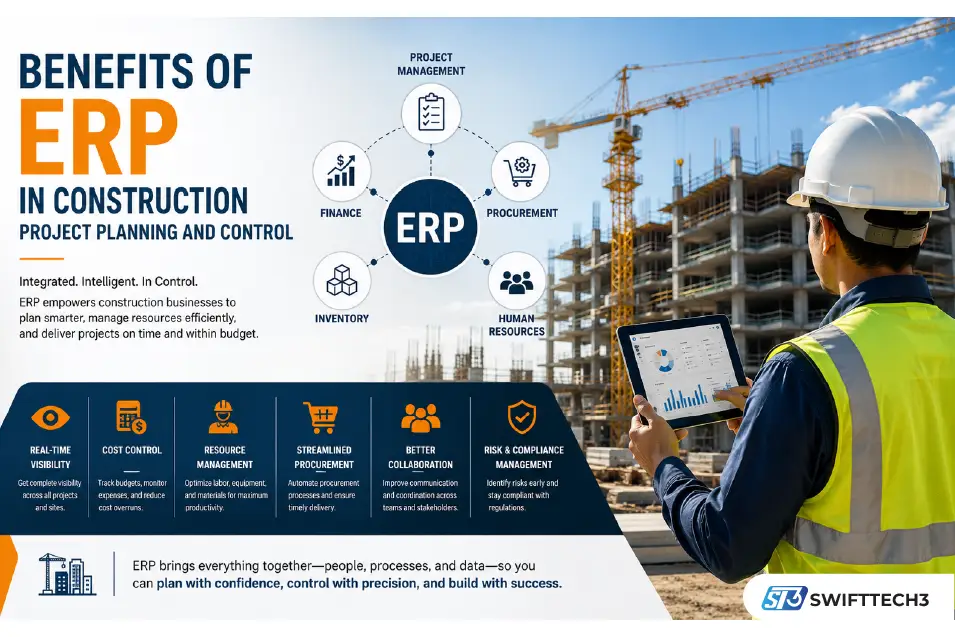
ERP (Enterprise Resource Planning) systems in construction integrate multiple business functions into a single unified platform. These typically include:
- Finance and accounting
- Procurement
- Project management
- Human resources
- Inventory and asset management
Unlike traditional software tools that operate in isolated silos, construction ERP systems connect all project operations through a centralized database. This allows project managers and stakeholders to make informed decisions using real-time, accurate information rather than relying on delayed reports or assumptions.
Today, many modern construction ERP software platforms also integrate with cloud-based collaboration systems, mobile applications, Building Information Modeling (BIM), and IoT-enabled equipment tracking technologies.
Why Construction Projects Need Strong Planning and Control
Construction projects involve multiple layers of coordination, including:
- Contractors and subcontractors
- Material suppliers
- Equipment logistics
- Workforce scheduling
- Budget and cost monitoring
- Regulatory compliance
Even a small delay in one operational area can create a ripple effect across the entire project schedule. Missed deliveries, labor shortages, or inaccurate reporting can quickly disrupt timelines and increase costs.
ERP solutions help eliminate these disconnects by providing a centralized environment for planning, execution, monitoring, and reporting.
Key Benefits of ERP in Construction Project Planning
Construction ERP systems provide several important advantages that directly improve project planning and operational efficiency.
1. Centralized Project Visibility
One of the biggest advantages of ERP is the availability of a single source of truth across the organization.
Project managers can:
- Monitor progress across multiple construction sites
- Track resource allocation in real time
- Identify delays early
- Access live dashboards and project reports
- Improve communication between departments
This level of visibility enables proactive decision-making instead of reactive problem-solving.
For large construction firms handling multiple projects simultaneously, centralized visibility significantly improves operational control and accountability.
2. Accurate Cost Estimation and Budget Control
Cost overruns remain one of the biggest challenges in the construction industry. According to McKinsey research, large construction projects often exceed budgets by up to 80% and experience major schedule delays.
A construction ERP system helps improve financial control by:
- Providing detailed line-item cost tracking
- Monitoring expenses in real time
- Comparing planned budgets with actual spending
- Identifying financial deviations early
- Improving forecasting accuracy
This level of financial transparency helps organizations maintain better cost discipline throughout the project lifecycle.
Construction cost control software integrated within ERP platforms also improves cash flow planning and reduces unnecessary spending.
3. Efficient Resource Management
Managing labor, equipment, and materials efficiently is critical for successful project execution.
ERP systems support efficient resource management by enabling:
- Intelligent workforce allocation based on project needs
- Equipment utilization tracking
- Inventory optimization to reduce shortages and excess stock
- Better scheduling coordination across sites
This minimizes resource waste while improving overall productivity and operational efficiency.
Industry studies also suggest that ERP-driven inventory optimization can reduce material waste and inventory overhead by approximately 10–15%.
4. Streamlined Procurement Processes
Procurement delays can disrupt entire construction schedules. ERP systems simplify procurement management through automation and centralized coordination.
ERP platforms help by:
- Automating purchase orders
- Tracking supplier performance
- Managing vendor contracts
- Monitoring procurement timelines
- Ensuring timely material availability
This strengthens supplier coordination and improves supply chain efficiency across construction projects.
Cloud ERP for construction companies also allows procurement teams and site managers to collaborate in real time regardless of location.
Enhancing Project Control Through ERP
If planning acts as a project’s compass, project control is the steering wheel that keeps execution on track.
ERP systems strengthen project control by improving monitoring, reporting, and risk management throughout construction operations.
Real-Time Monitoring
ERP systems provide live project updates related to:
- Task completion status
- Resource utilization
- Equipment performance
- Financial tracking
- Procurement progress
Real-time visibility allows managers to make quick adjustments whenever issues arise, helping projects stay aligned with timelines and budgets.
Mobile ERP applications further improve site-level reporting by enabling supervisors and engineers to update information directly from construction sites.
Risk Management
Construction projects naturally involve uncertainty and operational risk. ERP systems help organizations identify and manage risks early through:
- Historical data analysis
- Project trend tracking
- Delay prediction
- Cost escalation monitoring
- Compliance alerts
This predictive capability allows teams to take proactive corrective action before problems become critical.
Improved Communication and Collaboration
Miscommunication is one of the most common causes of project inefficiencies in construction.
Research from the Project Management Institute (PMI) consistently identifies ineffective communication as a major contributor to project failure.
ERP systems bridge communication gaps by:
- Providing a centralized collaboration platform
- Delivering real-time data access
- Reducing reliance on spreadsheets and email chains
- Improving coordination between office teams and field staff
This leads to smoother collaboration, faster reporting, and fewer misunderstandings across project stakeholders.
Advanced Features That Make ERP Essential
As construction operations become increasingly digitized, modern ERP systems now support advanced technologies that improve visibility and automation.
Data-Driven Decision Making
ERP platforms collect large amounts of operational and financial data throughout every project stage.
Organizations can use this data to:
- Improve future project planning
- Identify operational inefficiencies
- Optimize workflows
- Analyze profitability trends
- Enhance forecasting accuracy
Over time, this creates a valuable knowledge base that supports continuous improvement and smarter business decisions.
Compliance and Documentation Management
Construction companies must comply with numerous legal, safety, and regulatory requirements.
ERP systems help organizations:
- Maintain accurate digital records
- Automate compliance tracking
- Store project documentation securely
- Improve audit preparedness
- Reduce legal and operational risks
Centralized documentation also improves transparency during inspections and project reviews.
Integration with Modern Technologies
Modern construction ERP systems integrate with technologies such as:
- Building Information Modeling (BIM), which connects 3D building models with cost and scheduling data
- IoT-enabled equipment tracking that monitors machinery usage and performance in real time
- Cloud-based collaboration tools
- Mobile reporting applications
- AI-powered analytics platforms
This creates a connected digital ecosystem where every project component can be tracked, analyzed, and optimized more effectively.
Challenges Without ERP in Construction
Without ERP systems, construction companies often face operational inefficiencies such as:
- Disconnected departmental data
- Delayed decision-making
- Poor resource utilization
- Weak cost control
- Limited project visibility
- Communication breakdowns
- Procurement inefficiencies
These issues not only affect project timelines but also reduce profitability, operational efficiency, and client satisfaction.
As construction projects grow more complex, relying on spreadsheets and disconnected systems becomes increasingly risky.
Choosing the Right ERP for Construction
Selecting the right construction ERP software requires careful evaluation of business needs and long-term scalability.
Key Considerations
Construction companies should evaluate:
- Industry-specific construction features
- Scalability for multiple projects and locations
- User-friendly interfaces for field teams
- Cloud accessibility and mobile support
- Integration capabilities with existing tools
- Strong analytics and reporting functions
- BIM and ERP integration capabilities
- Vendor support and implementation expertise
A well-selected ERP platform becomes a long-term operational asset rather than simply another software investment.
Conclusion
ERP systems significantly improve construction project planning and control by enhancing visibility, coordination, resource management, and decision-making across every stage of execution.
As modern construction projects become more demanding, businesses need integrated systems capable of managing costs, procurement, scheduling, workforce coordination, compliance, and reporting from a single centralized platform.
Platforms such as ePROMIS provide integrated construction ERP solutions designed specifically for the needs of construction, contracting, and real estate businesses. With a strong focus on process optimization, scalability, and digital transformation, ePROMIS helps organizations improve operational efficiency, reduce project risks, and deliver consistent project success.
Ready to reduce project blind spots and improve construction efficiency? Discover how ePROMIS Construction ERP can support smarter project planning, real-time monitoring, and better decision-making for your next construction project.
Visit: Swifttech3