Most people think dog training is mainly about cues, commands, and repetition, but dogs learn far more from our energy, tone, and body language than from our words. To your dog, your posture, breathing, movement, and emotional state send powerful signals long before you ever give a verbal cue. That’s why working with a professional who understands this dynamic,like someone offering dog training collingwood,often begins with helping the human first. Your dog reads you constantly. Understanding what you’re communicating, even unintentionally, can transform your dog’s behavior.
Dogs don’t speak our language; they read the world through instinct, pattern recognition, and emotional cues. The way you enter a room, hold a leash, react to stress, or move your shoulders can tell your dog whether to relax, stay alert, or become anxious. Your energy becomes your dog’s environment.
Let’s explore how your internal state and physical cues shape your dog’s behavior, and what you can do to strengthen the communication between you.
1. Dogs Are Experts at Reading Human Emotion and Physiology
Dogs have evolved alongside humans for thousands of years. As a result, they’re exceptionally good at sensing emotional and physical changes.
What Dogs Can Detect
- tension in your muscles
- changes in breathing patterns
- subtle shifts in posture
- emotional arousal (stress, frustration, fear)
- excitement or overstimulation
- hesitation or uncertainty
- calmness and confidence
This isn’t guesswork,research shows dogs respond to human cortisol levels, heart-rate changes, micro-movements, and facial expressions.
Why This Matters
If you’re anxious, tense, or frustrated, your dog often mirrors that state.
If you’re calm and steady, your dog is more likely to relax and follow.
The Emotional Insight
Your dog doesn’t see your stress as “your problem.”
They see it as information about the environment.
To them, your anxiety means, “Is something wrong? Should I be on alert?”
2. Your Body Language Speaks Louder Than Your Voice
Humans rely heavily on verbal cues. Dogs rely heavily on visual cues.
Your Dog Watches How You Move, Not What You Say
If your voice says “stay calm” but your body says “I’m nervous,” your dog trusts the body, not the words.
Common mismatched signals:
- saying “stay” while leaning forward
- calling “come” with rigid posture
- telling your dog “it’s okay” while tightening the leash
- trying to stop barking while stepping backward uncertainly
How Dogs Interpret Body Language
- leaning forward = pressure
- turning sideways = safety
- stiff shoulders = tension
- soft posture = calm
- fast movements = excitement
- slow movements = reassurance
Your body is constantly communicating,even when you don’t realize it.
3. Leash Tension Transfers Human Emotion to the Dog
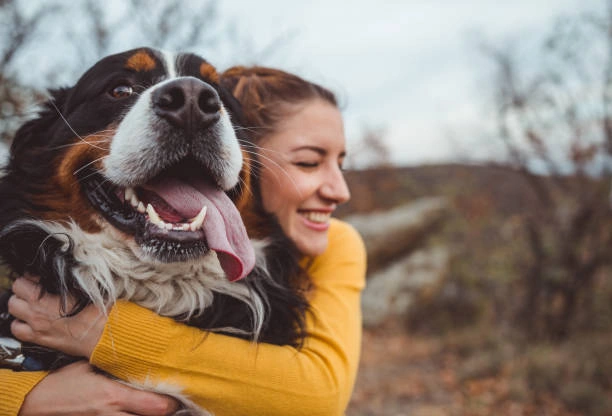
The leash is one of the clearest emotional communication tools between you and your dog.
When You’re Tense, You Pull
And when you pull, your dog thinks:
- “Something is wrong.”
- “There is a threat.”
- “We need to react.”
This is why nervous owners often have dogs that pull, bark, or react more strongly in public.
When You Are Relaxed, Your Dog Feels Safe
A loose leash tells your dog:
- “Everything is okay.”
- “There’s no threat.”
- “We can move calmly.”
The Loop Effect
Your dog’s reaction → your stress increases → leash tightens → dog’s stress increases → reaction worsens.
Learning to break this loop starts with your energy.
4. Your Emotional State Sets the Tone Before You Even Begin
Dogs pick up on your energy before you touch the leash, open the door, or give a cue.
Examples
- If you’re rushing, your dog becomes overstimulated.
- If you’re tense before a walk, your dog anticipates danger.
- If you’re frustrated, your dog withdraws or becomes anxious.
- If you’re calm and patient, your dog settles more easily.
Your emotional baseline becomes the “weather forecast” your dog uses to predict what’s coming.
Why This Matters in Training
Before working on your dog’s behavior, a good trainer helps you regulate:
- breathing
- pace
- tone
- posture
- mindset
Calm humans create calm dogs.
Discover more insightful articles on wellness, including “The Role of Omega-3 in Reducing Chronic Inflammation.”
5. Dogs Mirror Your Nervous System
A dog’s nervous system is highly sensitive to the nervous system of the humans around them.
Stress Is Contagious
When you’re stressed, your dog may:
- stiffen
- bark
- pace
- grow anxious
- become clingy
- react at triggers
- struggle to follow commands
Calm Is Contagious Too
When you’re grounded, your dog may:
- settle faster
- recover from triggers quicker
- show less reactivity
- respond better to cues
- remain focused
Why This Happens
Dogs rely on their humans for information about safety. If your nervous system signals “danger,” their brain switches into fight-or-flight mode.
6. Your Approach to Problems Shapes Your Dog’s Behavior
Dogs follow your lead, whether you realize it or not.
If You Approach Challenges with:
- frustration → dog becomes confused or defensive
- fear → dog becomes hyper-alert
- anger → dog becomes anxious
- confidence → dog becomes trusting
- patience → dog becomes calmer
- curiosity → dog becomes more willing to try
Your perspective becomes your dog’s perspective.
Behavioral Example
A dog who barks at strangers will escalate if the owner:
- stiffens
- pulls the leash
- holds their breath
- says “no, no, no” in a panicked tone
But the same dog often improves when the owner:
- stays loose
- breathes steadily
- positions the body calmly
- uses gentle cues
7. Dogs Prefer Clear Physical Signals Over Verbal Instructions
Dogs understand movement before words. Many behavior challenges come from unclear or conflicting signals.
Effective Body Language Cues Include:
- stepping forward with intention
- guiding with your body, not your voice
- using sideways posture to relieve pressure
- turning your body to encourage movement
- slow movements to calm
- predictable guidance
The clearer you are physically, the more confidently your dog can respond.
8. How to Regulate Your Own Energy to Help Your Dog Succeed
Improving your dog’s behavior often begins with small adjustments to your own body and state of mind.
Powerful Ways to Influence Your Dog Positively
- slow your breathing before cues
- soften your shoulders and jaw
- walk with intentional, steady steps
- avoid rushing transitions
- maintain loose leash handling
- keep your tone neutral and calm
- practice emotional neutrality around triggers
Simple Grounding Techniques for Walks
- take a deep breath before opening the door
- loosen your grip on the leash
- relax your stance
- move at a controlled pace
- focus on your dog’s body language, not the environment
Your calm presence becomes your dog’s guide.
FAQs
u003cstrongu003eHow does my energy affect my dog’s behavior?u003c/strongu003e
Dogs are able to sense your emotions and nervous system, and they frequently instantly mimic feelings of confidence, calmness, or stress.
u003cstrongu003eWhy does body language matter more than verbal commands for dogs?u003c/strongu003e
Dogs rely more on body language than verbal cues, reading tension, posture, and movement first.
u003cstrongu003eCan my stress make my dog anxious or reactive?u003c/strongu003e
Indeed, stress is sensed by dogs through their breathing, tense muscles, and pressure on the leash, which causes reactivity or anxiety.
u003cstrongu003eHow does leash tension communicate emotions to my dog?u003c/strongu003e
A loose leash conveys peace and safety, whereas a tight leash conveys danger or stress.
u003cstrongu003eDo dogs really mirror human emotions?u003c/strongu003e
Absolutely. Dogs naturally synchronize with their owner’s emotional and nervous system state.
u003cstrongu003eWhat body language helps calm a dog?u003c/strongu003e
Dogs can feel more secure and at ease when they are positioned gently, have their shoulders relaxed, move slowly, and breathe steadily.
u003cstrongu003eWhy do professional trainers focus on the owner first?u003c/strongu003e
Because a calm, controlled human helps dogs communicate more clearly and improve their behavior more quickly.
u003cstrongu003eHow can I regulate my energy before training or walks?u003c/strongu003e
When near triggers, stop, take a deep breath, loosen your hold, move deliberately, and remain emotionally detached.