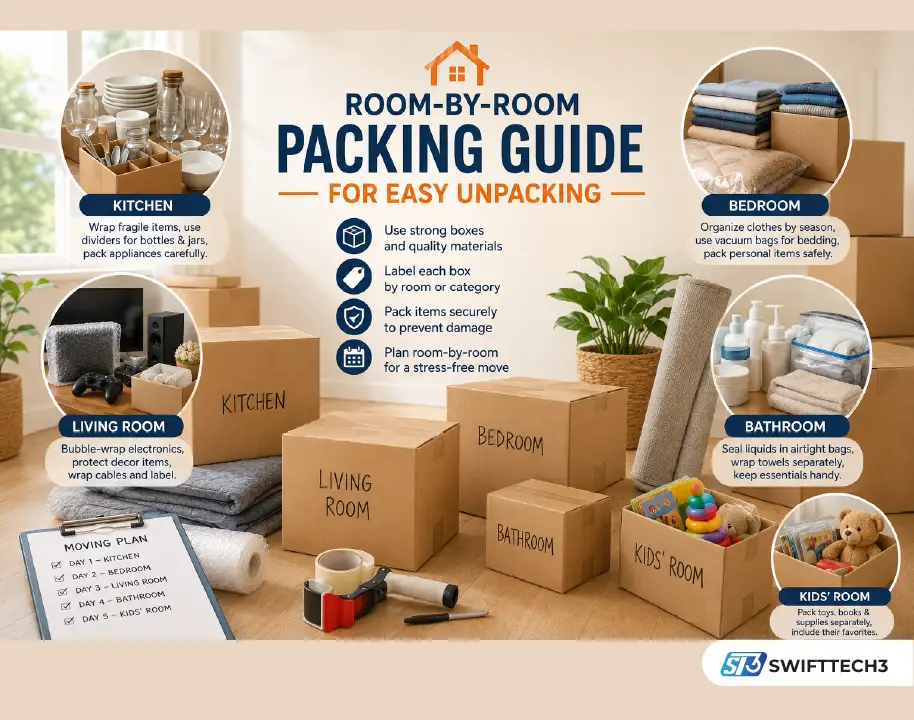
There is no point in starting to pack any room without spending a few minutes working out a plan. Prepare all your packing materials such as strong boxes, bubble wrap, packaging paper, labels, and sealing tape because you do not want to ruin your shipment by halfway searching. A labelling system, be it through colour coding, numbering, or simply categories, must be devised to ensure that each box ends up in its proper room. The best thing is to clean every room before packing to avoid wasting time and energy on transporting unwanted items. Make a special schedule, called moving week, dedicated to a particular room on particular days so that no one gets stressed in the end.
Kitchen: The Most Time-Consuming Room
You have an additional need in your kitchen due to the fragile objects and various small objects. To prevent scratches and cracks, wrap each glass, plate, and bowl separately using thick packing paper. Pack bottles, jars, glasses and spices using dividers or sectioned boxes that are safe, like packers movers do. Bundle the secure cutlery, knives and small tools and store in a separate well-identified container. Put pack appliances such as mixers and toasters in their original package (where possible); wrap carefully 2 times.
Bedroom: Keep It Light and Sorted
There are clothes, bedding, and personal items that should be packed in the bedroom. Organise the clothes by the season and how often they are used; the everyday clothes come last, and the occasional ones first. Blankets, quilts and bulky bedding are placed in vacuum-sealed bags and squashed for storage to save space. Put away personal belongings such as watches, documents and jewellery in different packages in order to remain safe as they undergo transit. Take the bed apart, furniture, side tables, and the furniture before daybreak to prevent delays.
Living Room: Electronics, Decor & Heavy Furniture
The living room is filled with several weak and bloated pieces of furniture. bubble-wrap home theatres, gaming consoles and TVs, then put them in cushioning cartons. Put the decorations and figurines, such as vases, figurines and frames, in ample wrappings to prevent the damage caused by vibration. Wrap the wires, cables and remote controls in labelled pouch bags so that it becomes easy to rearrange. Tightly roll carpets and rugs, use tapes and cover with plastic sheets so that they are not affected by dust and dirt.
Bathroom: Keep Essentials and Liquids Secure
Though the number of items in bathrooms is lower, they require leakproof packing. Put the seal toiletries, shampoo and cleaning products in airtight bags to avoid spillages. Put towel packs, mats and bathrobes individually; they also make cushions around delicate objects. Prepare a small bag of basic toiletries just in case you need it on your first night at the new home.
Kids’ Room: Keep Their Comfort in Mind
Children should pay special attention to their rooms so that they can have the most required things within their reach. Ask children to put their favourite toys in an exclusive box to make them feel included and not threatened. Put books, school supplies and art materials in different cartons to clear the office easily. Cushion packed items using soft toys and the space is maximised, and waste has been reduced.
Conclusion
A room-by-room packing system will make the packing process much easier and allow you to unpack without disorder. This is a technique used by several household shifting professionals that keeps your belongings in order and protects them throughout the procedure with the help of House Shifting Services or the DIY strategy that you have fully thought out.
Visit: Swifttech3