An emergency physician may move from chest pain to trauma to a complicated discharge in the same hour, then still face a long backlog of notes, coding tasks, and compliance work before the shift is truly over. That reality is one reason emergency departments continue to struggle with burnout, staff fatigue, and workflow bottlenecks.
AI in emergency medicine is starting to change that. Instead of replacing clinical judgment, modern AI tools are helping clinicians document faster, triage smarter, code more accurately, and keep the emergency department moving without adding more noise to the day.
The result is not just a faster administrative process. When used carefully, AI can give emergency teams back something they rarely have enough of: attention, time, and energy for patient care.
Why Administrative Burnout Has Become a Serious Emergency Department Problem
The emergency department is one of the most demanding settings in healthcare. Clinicians work under constant pressure, manage high patient volumes, and make rapid decisions with incomplete information. On top of that, they must handle large amounts of documentation, billing detail, compliance reporting, and electronic record management.
For many providers, the clerical load is no longer a side issue. Research widely cited in medical literature has found that physicians can spend nearly two hours on electronic health record and desk work for every hour of direct clinical face time. That imbalance affects morale, extends work beyond scheduled shifts, and contributes to cognitive fatigue.
PHR, or personal health record, data and EHR data can both add to the information burden. In practical terms, clinicians are often sorting histories, medication details, discharge instructions, coding requirements, insurance fields, and legal documentation while also trying to deliver safe and human care.
Why this matters: Administrative overload does not only hurt clinicians. It can slow patient throughput, delay discharges, increase handoff errors, and reduce the time available for clear patient communication.
How AI Improves Emergency Department Workflow
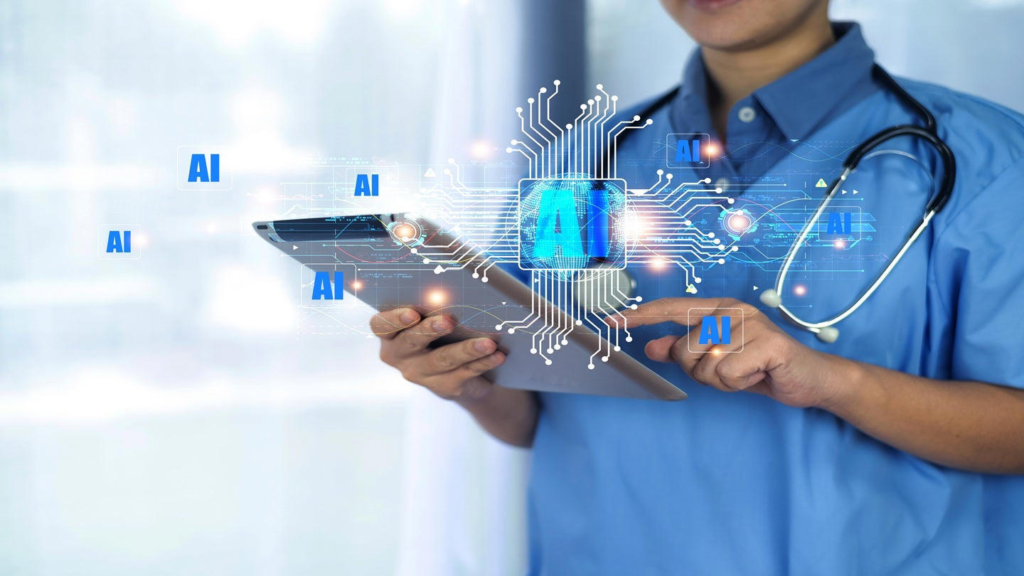
Developers are creating AI systems to support the parts of emergency medicine that are repetitive, time-sensitive, and heavily documented. The most useful tools combine machine learning, natural language processing, speech recognition, and predictive analytics to reduce friction inside existing workflows.
Patient Arrival
AI-Assisted Triage
Ambient Documentation
Coding and Review
Faster Disposition
In the best implementations, AI works quietly in the background. It does not replace the nurse, physician, coder, or case manager. It supports them by handling structured tasks faster and surfacing useful information when needed.
Real-Time Documentation Is One of the Biggest Gains
One of the clearest use cases for AI in emergency medicine is documentation support. Ambient AI tools can listen to the clinician-patient conversation, identify medically relevant details, and draft structured notes in real time. That means less typing during the encounter and less charting after the shift.
This matters because documentation is one of the biggest hidden drains on emergency department efficiency. When a physician has to split focus between the screen and the patient, both the interaction and the chart can suffer. AI-assisted note creation helps restore that focus.
Recent research on ambient AI documentation platforms has linked these tools with better clinician experience and less time spent in notes. Official vendor examples also show how this category is moving from pilot projects into operational workflows. Epic released AI Charting in 2026 as a built-in feature that listens during visits, drafts notes, and queues orders, while companies such as Suki and Augmedix continue to market ambient documentation and coding support that integrates into clinical systems.
Why it helps in the emergency department
- Less after-hours charting and fewer unfinished notes
- Better eye contact and communication during patient encounters
- More complete records pulled from spoken history and clinical context
- Faster handoffs between providers during busy shifts
AI-Supported Triage Can Improve Speed and Prioritization
Triage is one of the most time-critical processes in the emergency department. Nurses and physicians must quickly decide who needs immediate intervention, who can safely wait, and who may deteriorate sooner than they appear.
AI-based triage systems can analyze presenting symptoms, vital signs, clinical history, and prior utilization patterns to support risk prioritization. The goal is not to replace clinical triage judgment, but to flag patterns that may be easy to miss during peak crowding.
The American College of Emergency Physicians has highlighted AI triage and admission prediction as meaningful emergency medicine use cases. Predictive models can also help departments anticipate admission likelihood, resource use, and near-term crowding pressure, which is especially valuable when bed availability is tight and waiting rooms are full.
| Workflow Area | How AI Helps | Operational Benefit |
|---|---|---|
| Triage | Analyzes symptoms, vitals, and history for risk scoring | Earlier identification of high-risk patients |
| Admission Prediction | Estimates likelihood of hospitalization or observation needs | Better bed planning and patient flow |
| Crowding Forecasting | Uses live department and hospital data to detect bottlenecks | Fewer delays and smarter staffing decisions |
Medical Coding and Billing Are Becoming More Automated
Billing and coding are not glamorous topics, but they are a major source of delay and frustration for emergency departments. Incomplete charts, missed details, and poorly matched codes can lead to denials, rework, and lost revenue.
AI tools are increasingly being used to scan documentation and suggest billing-relevant details before claims are finalized. They can also detect missing information and help clinicians close charts with better coding accuracy.
What coding-focused AI can do
- Review notes for missing documentation elements
- Suggest ICD-10, CPT, or evaluation and management coding support
- Flag inconsistencies before submission
- Reduce claim denials and manual correction cycles
This is one reason clinical AI vendors are expanding beyond note generation. Suki, for example, now promotes coding support alongside ambient documentation and clinical Q&A, showing how the category is moving toward broader administrative assistance rather than simple speech-to-text alone.
Clinical Decision Support Works Best When It Stays Contextual
Emergency clinicians are already surrounded by alerts, reminders, and pop-ups. If AI adds more interruptions, it can make the shift worse instead of better. That is why the most promising AI decision-support systems are contextual rather than intrusive.
Instead of flooding clinicians with generic warnings, newer tools are designed to evaluate patient data in the background and surface only the most relevant information. That may include risk signals, missing workup steps, care pathway suggestions, or reminders linked to the patient’s condition and setting.
When designed well, AI becomes a co-pilot. It supports diagnostic confidence and workflow precision without trying to take over the room.
Can AI Actually Improve Provider Well-Being?
This is where expectations need to stay realistic. AI alone will not solve staffing shortages, overcrowding, or systemic reimbursement pressure. But it can reduce one of the most exhausting parts of the job: low-value administrative work that stretches into nights and weekends.
Early evidence on ambient documentation and related clinical AI tools suggests benefits in note time, workflow experience, and perceived documentation burden. That does not mean every deployment will work perfectly. Poorly designed systems can still create alert fatigue, mistrust, or extra review work. But when the tool fits the workflow, clinician satisfaction tends to improve.
For emergency departments, even modest gains matter. A few minutes saved per chart can turn into less end-of-shift backlog, smoother sign-outs, and more mental bandwidth during high-acuity hours.
How Patients Benefit When Administrative Friction Drops
The benefits of AI in emergency medicine are not limited to providers. Patients feel the difference when the department runs more smoothly.
- Clinicians spend more attention on the patient instead of the keyboard
- Notes are completed faster and often with better detail
- Triage and disposition decisions can move more efficiently
- Communication between teams becomes easier when records are cleaner
- Quality improvement teams can use data trends to refine protocols over time
That last point matters more than it may seem. AI-supported analytics can help departments study return visits, admission trends, documentation delays, and throughput patterns so leaders can improve systems, not just individual encounters.
Real-World Examples Making the Space More Tangible
Healthcare leaders are more likely to trust AI when they can connect it to real products and actual workflows. Several names now appear regularly in this space:
- Epic AI Charting: built into the EHR workflow to listen during visits, draft notes, and support order preparation
- Suki: ambient AI assistant focused on documentation, coding, and clinical Q&A
- Augmedix: ambient documentation platform integrated into clinical workflows, including through Epic’s ecosystem
These examples matter because they show the market is shifting from theory to operational deployment. For hospital administrators and emergency department leaders, that makes the discussion less about “whether AI is coming” and more about which tools are actually useful, safe, and scalable.
Responsible Adoption Still Matters
AI should never be introduced into emergency medicine as a black box that no one understands. Healthcare organizations need clear standards around privacy, model validation, oversight, and clinician accountability. The emergency department is not a forgiving environment for vague tools or untested claims.
Leaders should ask practical questions before adoption:
- Does the tool fit the actual emergency department workflow?
- Has it been validated in clinical settings similar to ours?
- How are data privacy and HIPAA requirements handled?
- Can clinicians easily review, edit, and reject AI-generated output?
- Does the system reduce clicks and rework, or simply move them elsewhere?
Training is equally important. Clinicians need to understand what the tool does well, where it can fail, and how to use it without overtrusting it. In emergency medicine, AI should support professional judgment, not dilute it.
The Future of Emergency Department Operations
Administrative efficiency is no longer a side project in emergency medicine. It is tied directly to sustainability, staffing resilience, and patient safety. As workforce shortages continue and case complexity rises, departments will need tools that remove friction without slowing clinical care.
That is where AI can provide lasting value. By helping with documentation, triage support, coding, and workflow coordination, AI gives emergency teams a practical path to reduce burnout while improving consistency and speed.
The most important shift is this: the best use of AI in emergency medicine is not flashy automation for its own sake. It is thoughtful workflow redesign that gives clinicians more space to practice medicine the way it should be practiced, focused, fast, and centered on the patient.
FAQs
How is AI used in emergency medicine today?
AI in emergency medicine is mainly used to support documentation, improve triage accuracy, assist with coding and billing, and provide clinical decision support. These tools help emergency departments reduce administrative burden so clinicians can spend more time focusing on patient care.
Can AI replace doctors and nurses in the emergency department?
No, AI is not designed to replace doctors or nurses in the emergency department. It works best as a support tool that helps healthcare teams make faster, better-informed decisions while reducing repetitive administrative tasks. Clinical judgment, communication, and hands-on care still depend on trained medical professionals.
References
- JAMA Network Open: An Ambient Artificial Intelligence Documentation Platform and Clinician Experience
- American College of Emergency Physicians: Artificial Intelligence in Emergency Medicine
- Epic: AI Charting Rolls Out Alongside an Expanding Set of Built-In AI Capabilities
- Suki: AI Assistant for Clinicians
- Epic Showroom: Augmedix
- JAMA Network Open: Use of Ambient AI Scribes to Reduce Administrative Burden and Professional Burnout
- JAMA Network Open: Background on EHR Time Burden in Clinical Practice
For More Similar Articles Visits: Swifttech3