


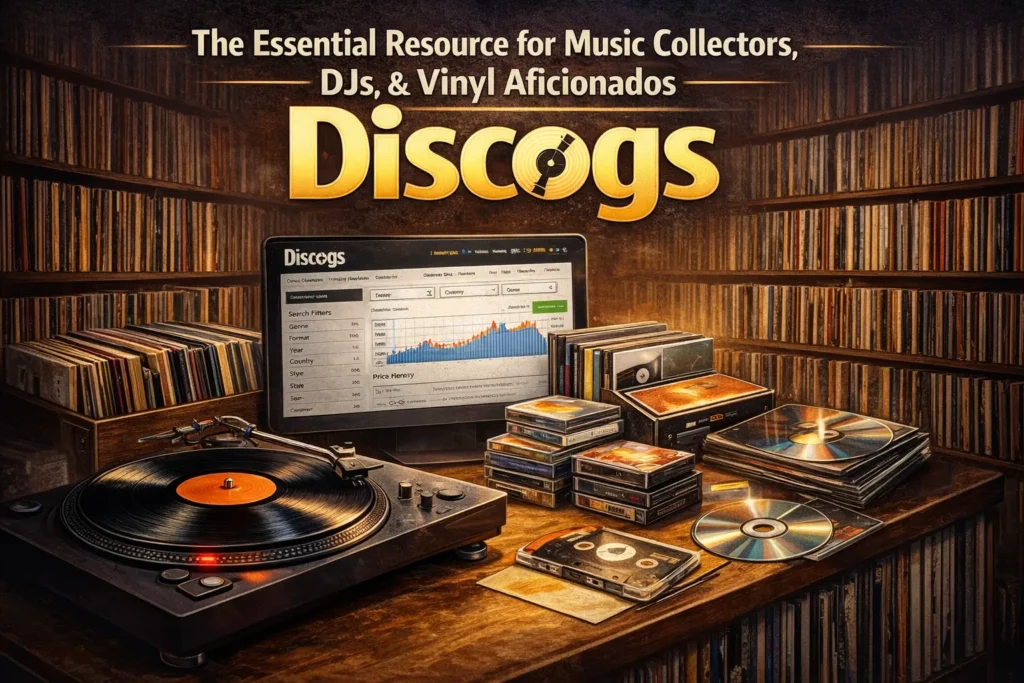
If you’ve ever overheard someone mentioning “Discog” in a record store or online, chances are they’re referring to Discogs—the massive, user-powered music database and marketplace. Launched in 2000, this platform is much more than a typical website; it has become the go-to hub for music collectors of all kinds. Whether you collect vinyl, CDs, tapes, or even rare formats like 8-tracks, Discogs offers a comprehensive and dynamic archive of music releases. It’s a place where fans can catalog their collections, buy and sell, and dive deeply into the world of physical media.
How the Discogs Marketplace and Database Work
Crowd-Sourced Cataloging: A Community-Powered Platform
Discogs is built entirely by its community. Fans and collectors around the world submit detailed entries for physical media, creating a database that grows and evolves with each contribution. This crowd-sourced model means that each music release—whether a vinyl, CD, or cassette—can include key information like catalog numbers, barcode data, label variations, edition notes, and even details about colored vinyl or special pressings. While this creates a high level of accuracy, it’s important to note that mistakes can sometimes slip through. As of 2025, Discogs hosts more than 18 million releases, with over 10 million artists contributing to this ever-expanding archive.
Advanced Search Filters for Easy Exploration
One of the most useful features of Discogs is its powerful search functionality. You can search for items by artist, album title, label, or catalog number. Additionally, there are filters to refine your search by country, media format, pressing, or release year, making it easier than ever to find that specific version you’re seeking. While the interface may appear a bit old-school, it gets the job done efficiently, allowing you to explore an incredibly detailed and vast collection of music.
The Marketplace: A Place to Buy, Sell, and Learn
The Discogs Marketplace is where collectors can buy and sell music, and what sets it apart from other platforms is the ability to view past sale prices. The marketplace provides data on median, low, and high sale prices, which helps buyers gauge the true value of rare or hard-to-find releases. This price transparency is invaluable for collectors, enabling them to avoid overpaying or underselling their items.
Why Discogs Matters to Music Collectors
Discogs is more than just a marketplace; it’s a cultural archive and a community-driven resource. Here’s why it matters:
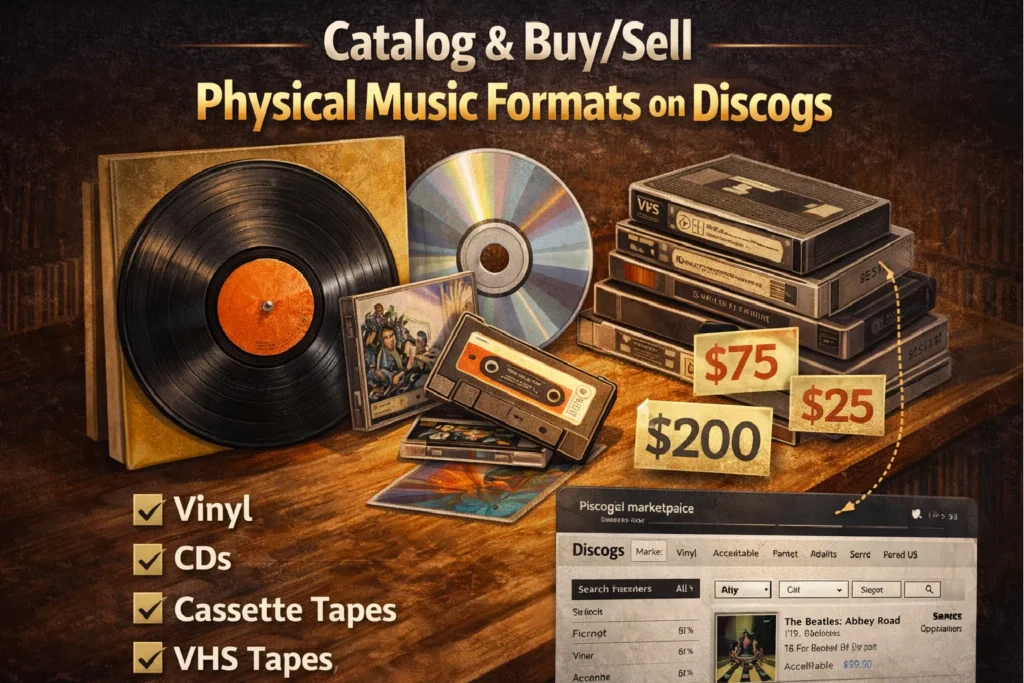
- Wide Range of Media: Discogs covers a broad spectrum of music formats, including vinyl, CD, cassette, VHS, and even shellac records, ensuring that almost every kind of physical media is accounted for.
- Accurate and Verified Data: Because the database is built by collectors, it’s one of the most accurate sources of information available. This level of detail and authenticity is crucial for enthusiasts seeking rare editions and detailed release notes.
- Price Transparency: Historical price data helps maintain transparency in the marketplace, allowing both buyers and sellers to make informed decisions based on real sale prices.
- Free to Use: Browsing and cataloging your collection on Discogs is completely free. Only sellers pay fees when making a sale, which makes it accessible to collectors of all kinds.
Pros and Cons of Discog
| Pros | Cons |
|---|---|
| Massive Catalog: Over 18 million releases, Discogs is a comprehensive resource for collectors worldwide. | Outdated Interface: The site’s interface may feel old-fashioned, which can be a bit clunky for newer users. |
| Detailed Data: Every release is accompanied by information like catalog numbers, pressings, and barcode data. | Time-Consuming Data Entry: Adding new entries to the platform requires accuracy and effort, which can be a slow process. |
| Transparent Marketplace: Price history data helps buyers assess the true market value of rare items. | Selling Fees: Discogs charges fees for sellers, which can impact their profits. |
| Free to Browse and Collect: Users can catalog their collections and explore the database for free. | Need to Check Seller Ratings: It’s crucial to review seller ratings before making a purchase to avoid potential issues. |
Tips for Using Discogs
- Check Price History Before Buying: Always review the price trends of an item to ensure you’re paying a fair price.
- Build Your Collection and Wantlist: Keep track of the items you own and the ones you still need by creating a personalized collection and wantlist.
- Submit Accurate Entries: If you’re adding new releases to the database, ensure you have the item physically in hand to guarantee accuracy.
- Explore Hidden Gems: Dive into different genres and styles on Discogs to discover rare finds and overlooked gems in the world of music.
FAQs About Discogs
Yes! Browsing the Discogs database, cataloging your collection, and exploring its features are completely free. Only sellers pay a commission on their sales.
By 2025, Discogs is projected to house over 18 million releases cataloged across nearly 10 million artists, making it one of the largest and most comprehensive music databases globally.
Yes, if you own a physical copy and follow Discogs’ submission guidelines, you can add your own release to the platform. For more information, you can review the Discogs Submission Guidelines on their website.
Discogs primarily focuses on physical media. While digital-only releases are occasionally added, they are relatively rare on the platform.
Final Thoughts: Why Discog Still Rules
Discogs has cemented its place as a vital resource for music collectors, DJs, and vinyl enthusiasts. It’s not just a website—it’s a living archive that preserves music history while allowing fans to connect over their shared love for physical media. Whether you’re a seasoned collector hunting for a rare edition or a novice just starting your collection, Discogs offers the tools and data you need to thrive in the world of vinyl and beyond.
In a world dominated by streaming services, it’s remarkable that millions of collectors still flock to Discogs, a platform that celebrates the tangible and tangible aspects of music—something that will never go out of style.
Visit our website: Swifttech3
