


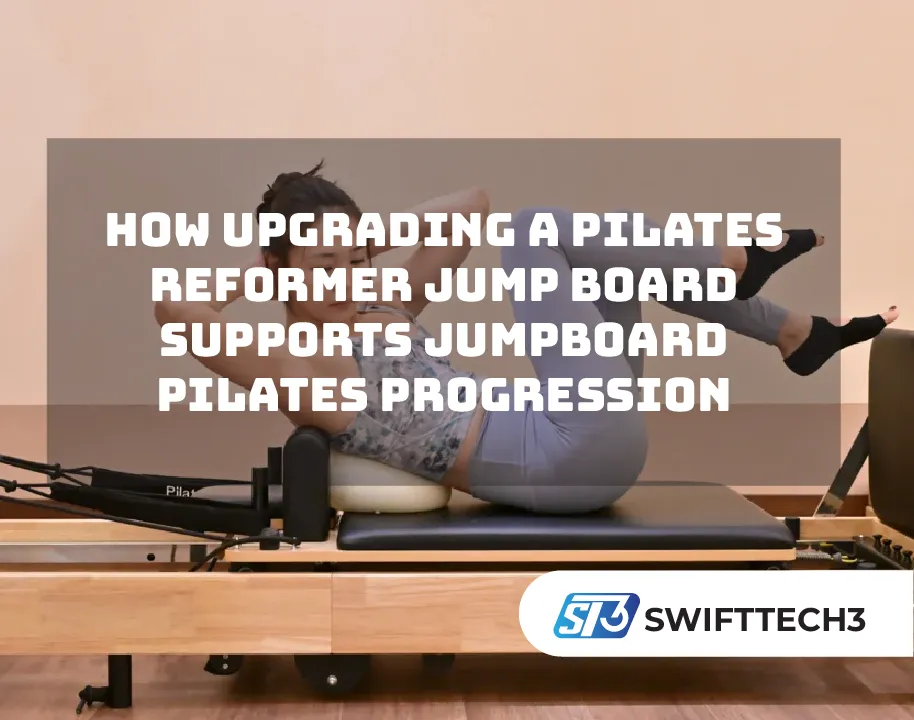
Jumpboard Pilates has become one of the most requested Reformer class styles in modern studios and for good reason. It combines Pilates control with cardio, rhythm, and athletic power, allowing students to build endurance and leg strength without the heavy impact of traditional jumping.
But here’s what many instructors notice over time:
a jumpboard program can start strong, yet progression stalls sooner than expected.
Students hesitate to jump bigger, instructors avoid certain sequences, and classes slowly shift back toward safer, more basic patterns.
Most of the time, the limitation isn’t the students. It’s the experience of the board itself.
When a jump board begins to feel slightly unstable, inconsistent, or noisy even if it’s still “working” confidence drops, and with it, progression.
That’s why upgrading a Pilates Reformer Jump Board is not simply a hardware decision.
It’s a training decision. A more stable, consistent board makes it easier to teach jumpboard Pilates as a structured progression system from foundational rhythm all the way to advanced, athletic movement.
To make this clear, we’ll start with what real jumpboard progression looks like, then explain why it often breaks down, and finally show how upgraded jump board designs create the conditions for long-term advancement.
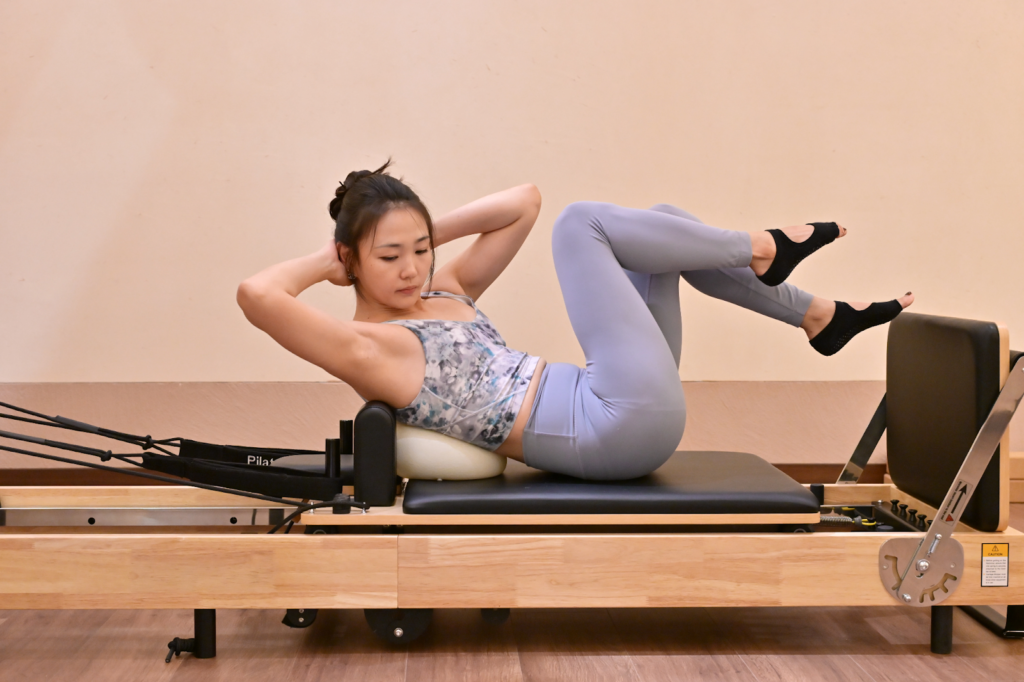
1 | Experience & Expertise: Why We’re Writing This
Before we go deeper, it’s fair for readers to ask: Where is this perspective coming from?
We wholesale Pilates equipment for export markets, working closely with studio owners and procurement partners who source equipment for commercial environments rather than single-user home use.
Our input comes from the practical side of the industry: what studios report after months of use, what buyers worry about before purchase, and what design changes reduce long-distance after-sales friction.
In other words, we’re not describing “perfect use.” We’re describing the reality of pilates reformer with jump board classes in busy studios: many users, fast pacing, varied technique, and limited time for frequent adjustments.
With that context established, the next question becomes obvious: Why does the jump board reveal issues earlier than other reformer components?
2 | What Real Jumpboard Pilates Progression Looks Like
When jumpboard Pilates is taught as a progression not just a collection of jumpboard exercises the program usually evolves in three noticeable ways.
First, students become more committed in their movement quality.
They land softer, maintain alignment longer, and stop “bracing” out of fear. This is where knee tracking, pelvic control, and core timing improve the most.
Second, instructors gain freedom in programming.
Once the board feels consistent, coaches are far more willing to include tempo blocks, single-leg sequences, lateral variations, and longer endurance sets without worrying about equipment feedback.
Third, jumpboard classes become a long-term format rather than a short-term novelty.
Instead of being a “fun cardio add-on,” jumpboard Pilates becomes a reliable pathway that students return to week after week because they can actually feel measurable improvement.
In other words, the true goal isn’t simply “more jumping.”
The goal is more confident movement under higher complexity.
And that requires a clear progression pathway.
3 | A Practical Jumpboard Pilates Progression Pathway
The simplest way to structure jumpboard progression is to move through five stages:
control → rhythm → unilateral strength → multi-plane patterns → advanced combinations
This mirrors what we see in most well-run studios: students need stable landings before they can handle tempo, and they need tempo before unilateral and lateral work becomes safe and effective.
Level 1: Control and Landing Quality
Start with:
- parallel jumps
- frog jumps
- V-position jumps
- running patterns
The focus here is not speed. It’s consistency quiet landings, stable pelvis, and clean knee tracking.
Level 2: Rhythm and Endurance
Then build:
- tempo sequences
- 8-count / 16-count combinations
- longer continuous blocks
At this stage, students learn to hold technique under fatigue, which is the real transition into intermediate training.
Level 3: Unilateral Control
Once rhythm is stable, add:
- single-leg jumps
- scissor jumps
- alternating patterns
- single-leg running
This is where progression becomes real because unilateral work exposes asymmetry instantly.
Level 4: Multi-Plane Training
Finally, expand into:
- skater jumps
- lateral side-to-side patterns
- cross-over / diagonal jumps
- variable tempo combinations
This is where jumpboard Pilates becomes athletic training, not just cardio.
You can already see the key pattern: as progression improves, landings become less centered and force becomes less symmetrical.
That is exactly why equipment quality matters more and more as students level up.

4 | What Advanced Jumpboard Pilates Can Include
When students reach Level 3–4, jumpboard Pilates opens up into advanced programming that feels both athletic and distinctly Pilates-based.
Examples include:
- single-leg endurance series
- skater series for lateral power
- cross-over and diagonal patterns
- tempo endurance blocks
- plyometric combinations with tempo changes and landing variations
- athletic jump flows that combine multiple planes and rhythm shifts
These movements build more than cardio. They improve:
- lower-body strength and glute recruitment
- coordination and reaction control
- core timing under speed
- athletic confidence without joint-heavy impact
However, there’s a turning point here:
advanced jumpboard Pilates requires trust.
When students don’t fully trust the rebound or stability, they hold back. When they hold back, the training becomes smaller, less effective, and less progressive.
This is exactly where upgraded jump boards begin to change outcomes.
5 | Why Upgrading a Jump Board Makes Progression Easier
Instructors often assume progression stalls because students need more strength or more coaching. Sometimes that’s true. But in jumpboard Pilates, there’s another quiet factor:
the board teaches the nervous system.
If the board feels stable and consistent, the nervous system relaxes and allows more output.
If it feels inconsistent even slightlyth e nervous system protects itself by reducing range, speed, and commitment.
That’s why upgraded jump boards tend to accelerate progression in three ways:
Stability supports confident landings
As soon as you introduce single-leg or lateral patterns, landings naturally move off-center. Strong stability helps students stay aligned instead of compensating.
Consistency supports tempo training
Tempo blocks require predictable rebound. If rebound varies side-to-side, rhythm breaks down and alignment follows.
Durability supports long-term programming
In studios, jump boards are exposed to daily cyclic stress. A board that stays stable for years rather than months lets instructors build progression without constantly scaling back.
At this point, the conversation naturally becomes:
If upgraded boards support progression, what exactly causes standard boards to limit it?
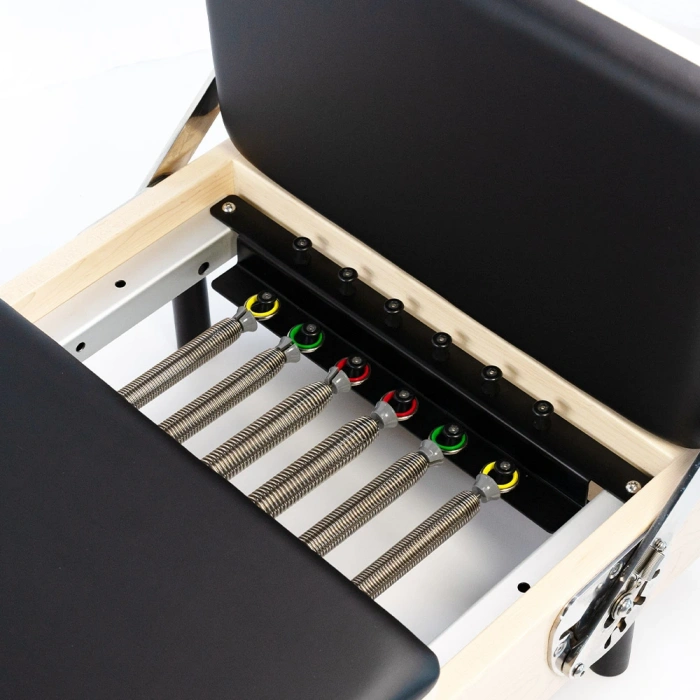
6 | Why Standard Jump Boards Often Limit Progression in Studios
Traditional jump boards can be perfectly fine for occasional home use. But in commercial studios, the usage pattern is completely different: many bodies, many intensities, many imperfect landings, every day.
Over time, common issues appear:
Load concentrates in the same points
Repeated impact targets the same mounting areas, increasing loosening and fatigue.
Torsional resistance is limited
Off-center landings create twisting. That twisting shows up as uneven rebound and side-to-side inconsistency especially obvious in unilateral and lateral work.
Wear happens gradually
The board still functions, but it starts to feel less reliable:
slight wobble, slight noise, slight “softness.”
And that’s enough to make both students and instructors scale down intensity.
This is why the jump board often becomes the first part of a Reformer that feels “less professional” in high-traffic studios even before anything breaks.
If the goal is to prevent that loss of trust, the next question is simple:
What should an upgraded jump board change to protect stability, consistency, and long-term confidence?
7 | What an Upgraded Pilates Reformer Jump Board Should Improve
As a Pilates equipment manufacturer,we think atruly advanced jump board upgrade isn’t about making the board heavier.
It’s about improving the way forces travel through the structure.
Here are the upgrades that make the biggest difference in commercial environments:
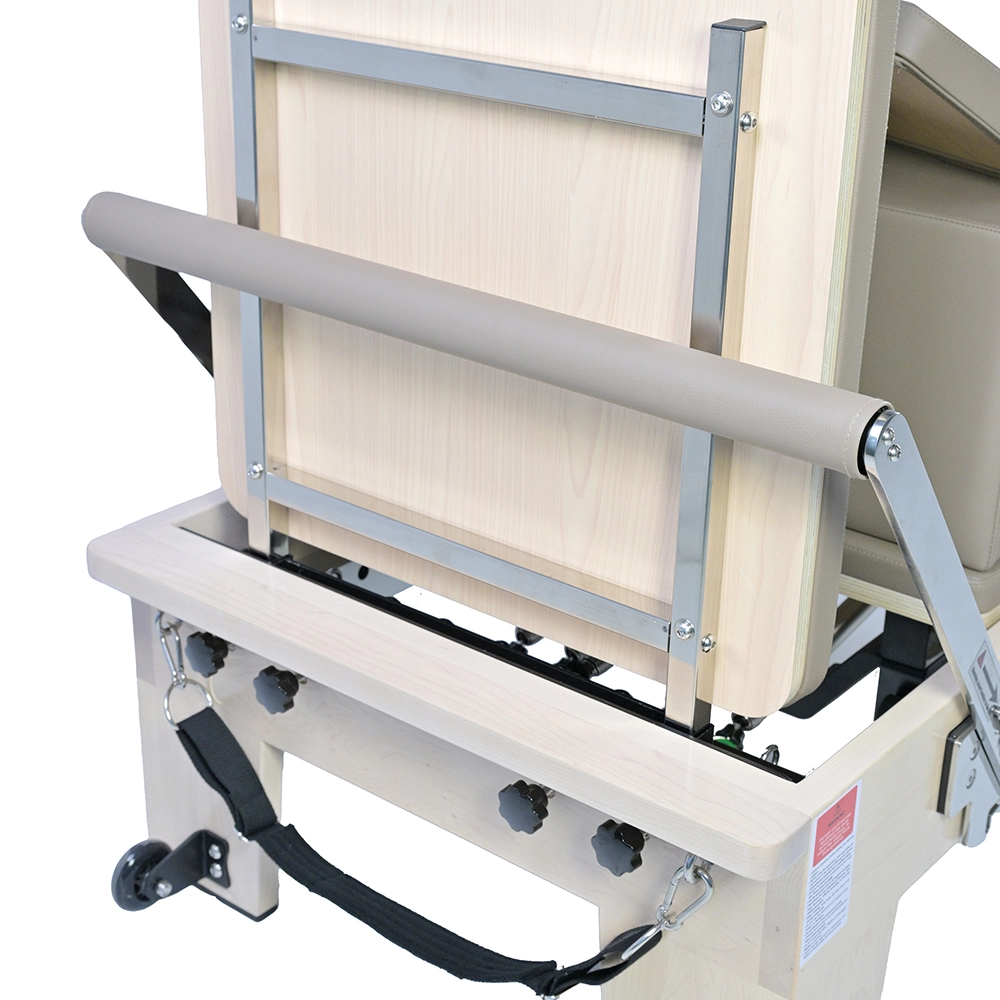
Reinforced side supports
Metal side supports shift the board from a single load-bearing panel into a composite structure, reducing flex and improving stability during impact.
Cross-connection structure
A stabilizing crossbar links both sides, improving torsional resistance and creating more uniform rebound across the board. This matters most in tempo training and single-leg work.
Open structure for climate adaptation
Wood expands and contracts with temperature and humidity especially in export or coastal climates. A design that avoids over-constraint reduces long-term noise, cracking, and warping.
Modular integration
A modular jump board isolates wear to the attachment module rather than transferring stress into the Reformer frame, making replacement and long-term service easier.
Each upgrade supports the same outcome:
a jump board that feels stable today and still feels stable after months of daily classes.
8 | Conclusion: Progression Happens When Every Jump Builds Confidence
Jumpboard Pilates continues to grow because it delivers endurance, rhythm, and athletic power while maintaining Pilates alignment and control. But the most successful programs share one principle:
progression depends on trust.
- When the board stays stable and consistent:
- students commit more fully
- instructors program more progressively
- studios build a repeatable, high-retention jumpboard system
Upgrading a Pilates Reformer Jump Board isn’t just an equipment upgrade.
It’s a progression upgrade because in jumpboard Pilates, every landing either builds confidence or creates hesitation.
If your studio wants jumpboard Pilates to move beyond basic cardio and into structured progression, protecting stability is the simplest way to make advanced training possible.

FAQ
It can be more joint-friendly than hard-surface jumping because springs absorb shock. Safety depends on stable equipment, correct form, appropriate spring settings, and gradual progression with qualified instruction.
Traditional Reformer Pilates focuses on slow controlled resistance, strength, and flexibility. Jumpboard Pilates adds repeated landing and rebound cycles, elevating heart rate and improving endurance and athletic movement.
Because jumping creates high-frequency cyclic loading. Small weaknesses in stability or torsional resistance become noticeable faster through wobble, noise, and rebound inconsistency.
Read more engaging articles in the Gadgets category at Swifttech3.
